
Last updated November 16, 2026
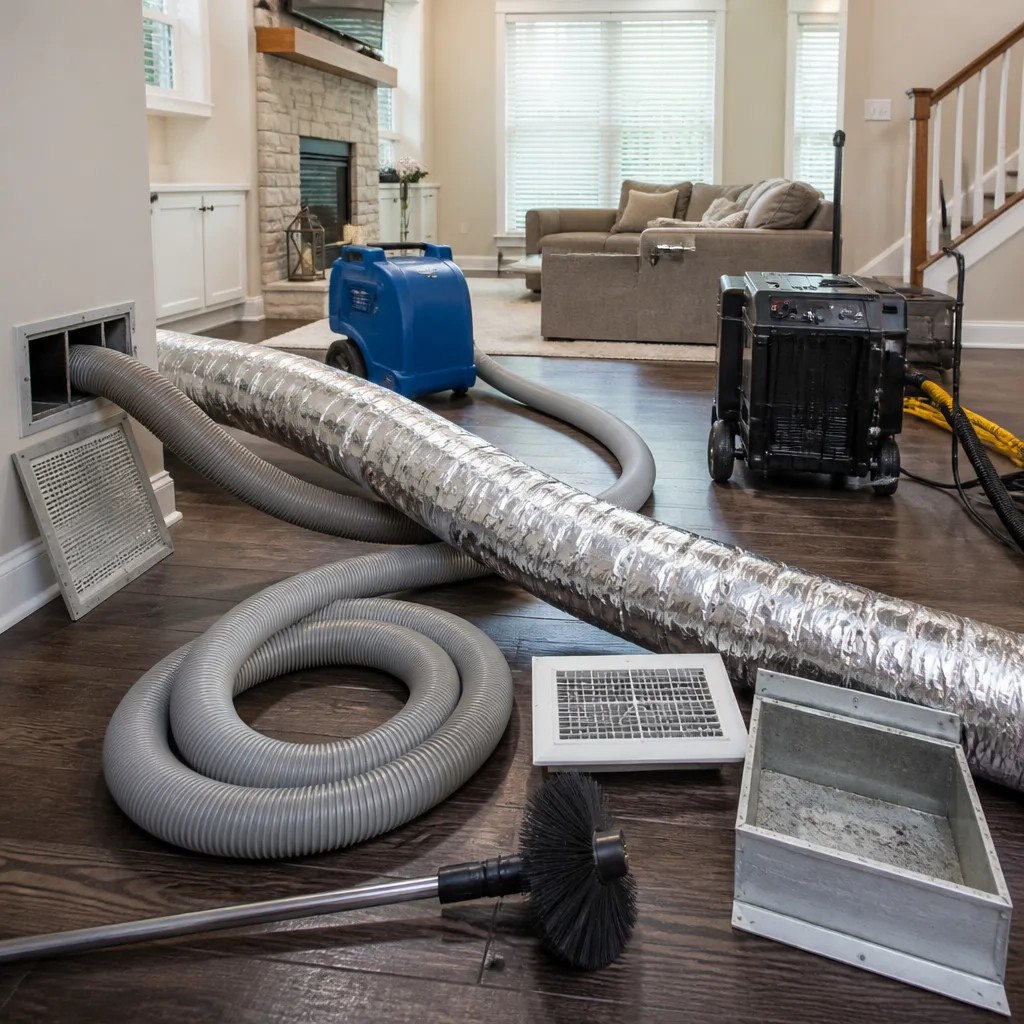 Whole-home duct cleaning
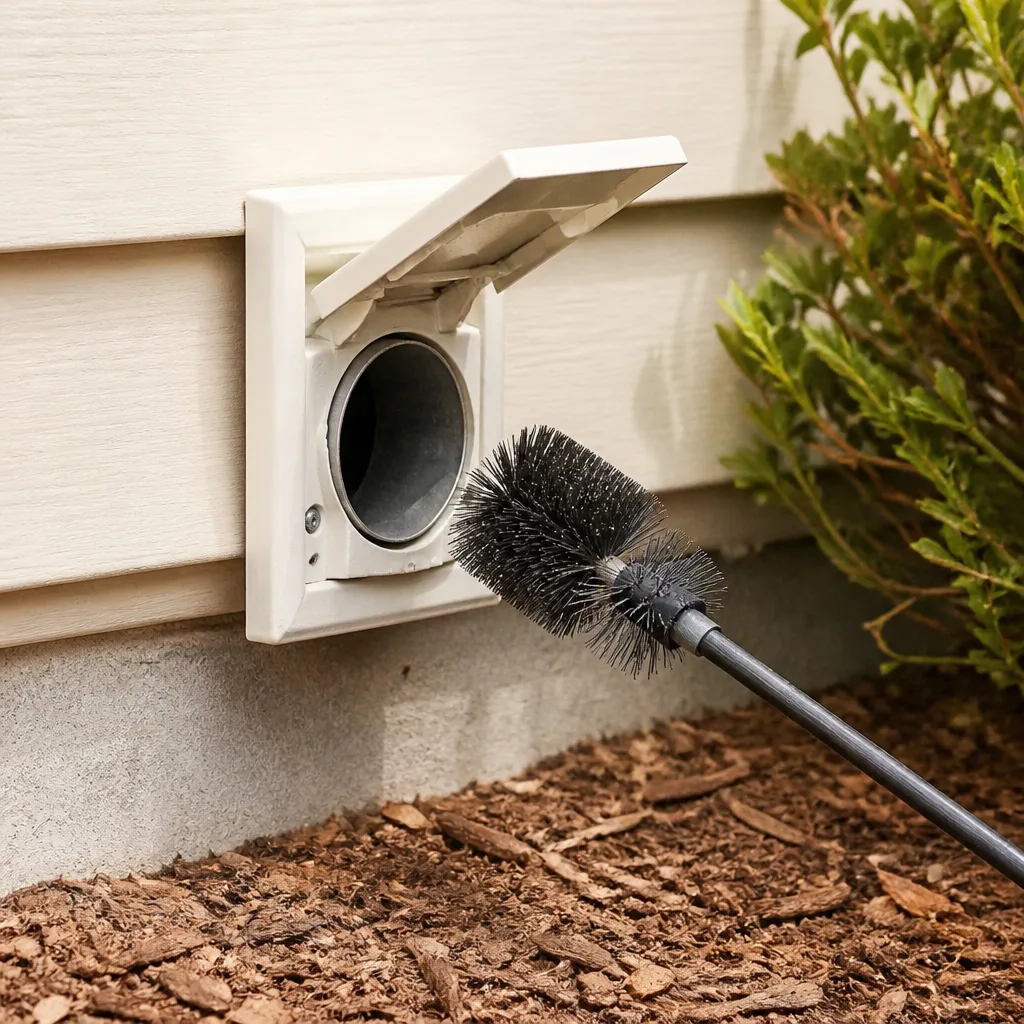 Dryer vent cleaning
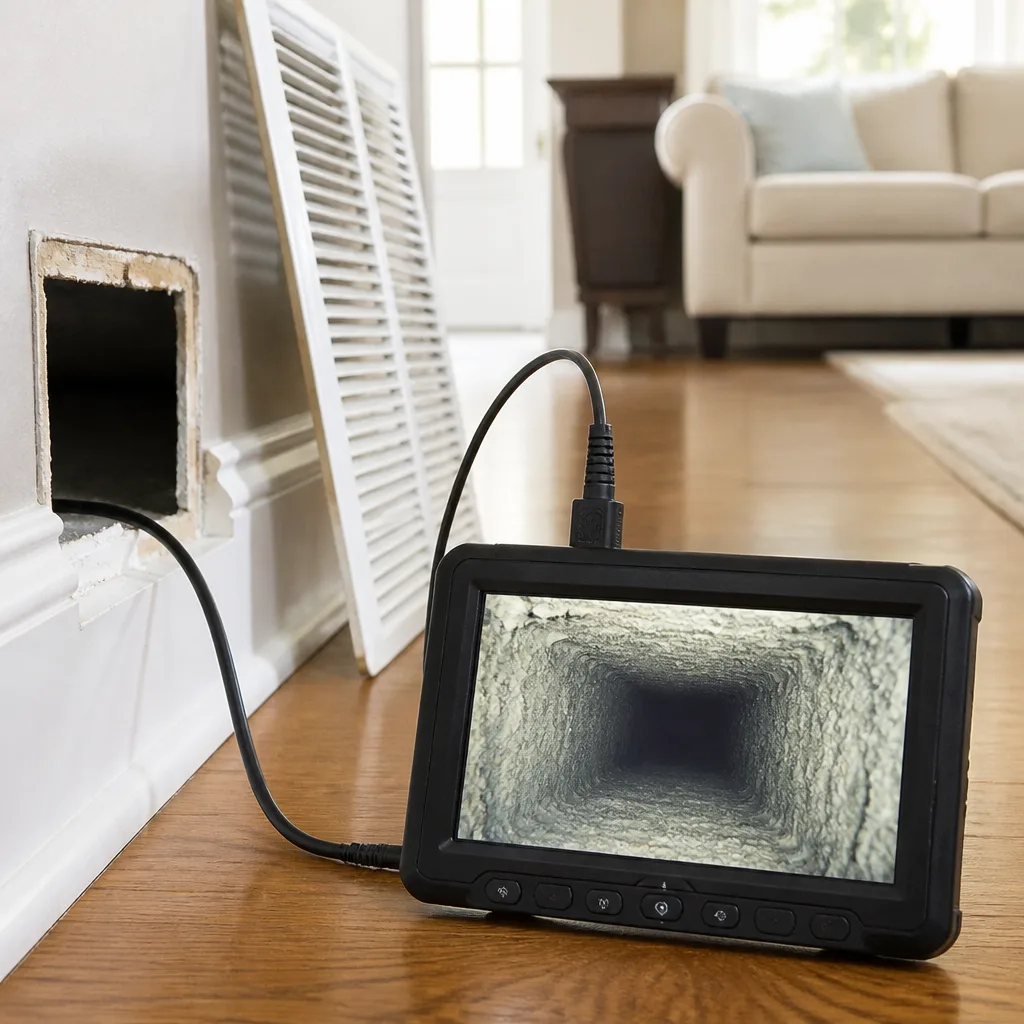 Camera inspection
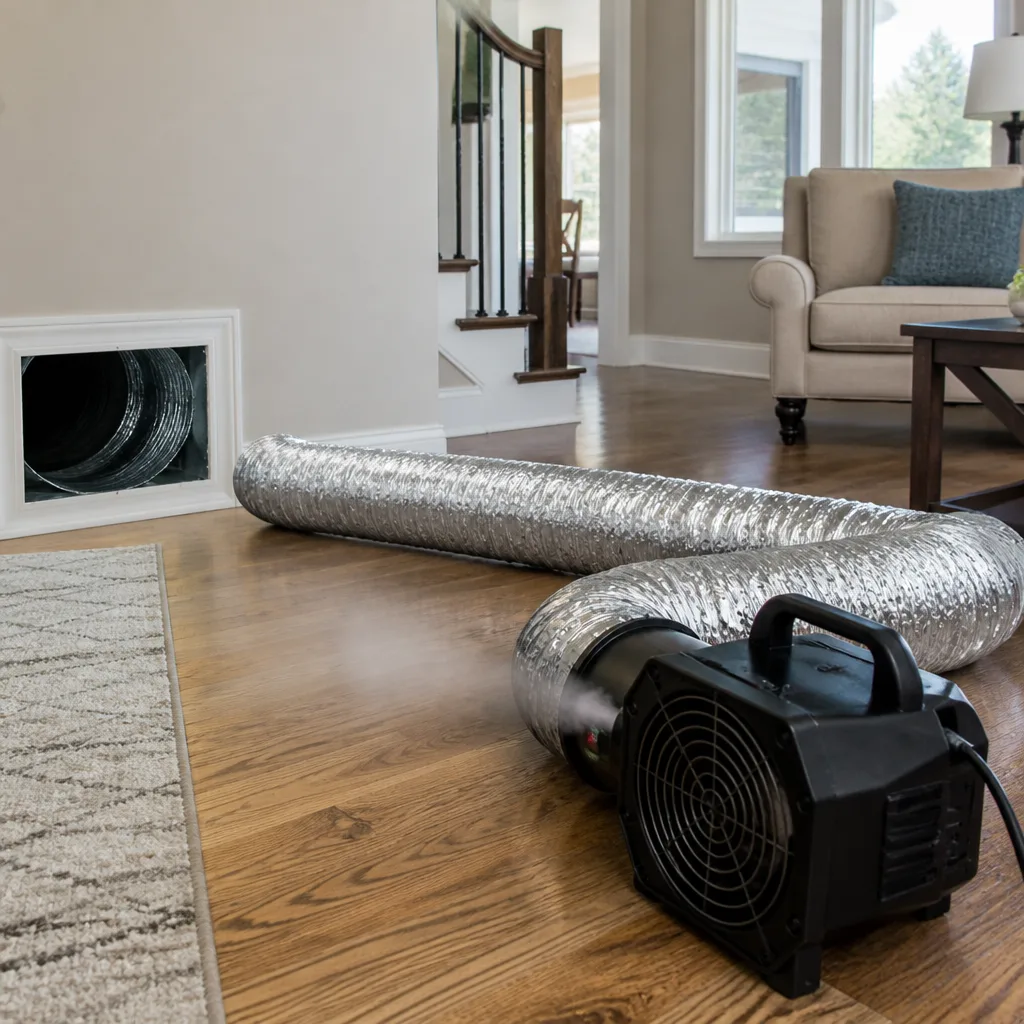 Sanitizing & deodorizing
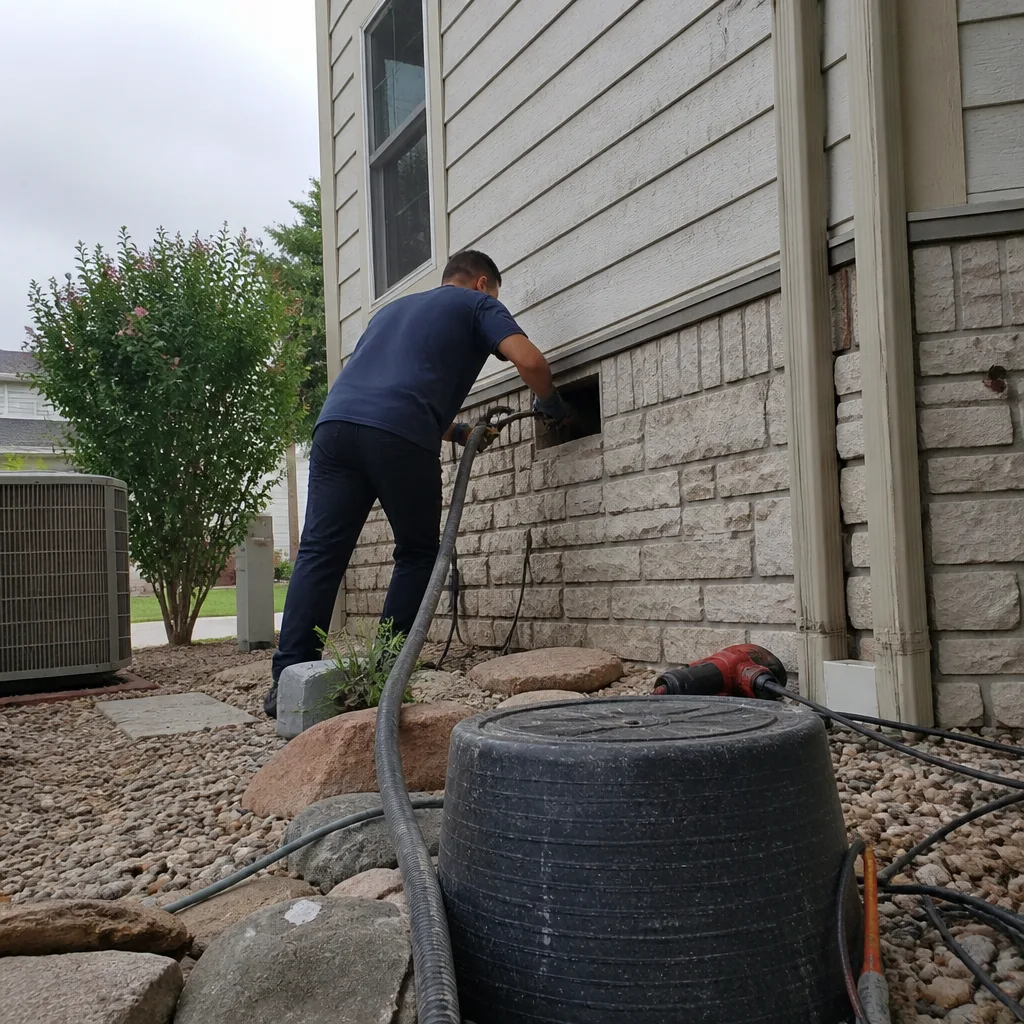
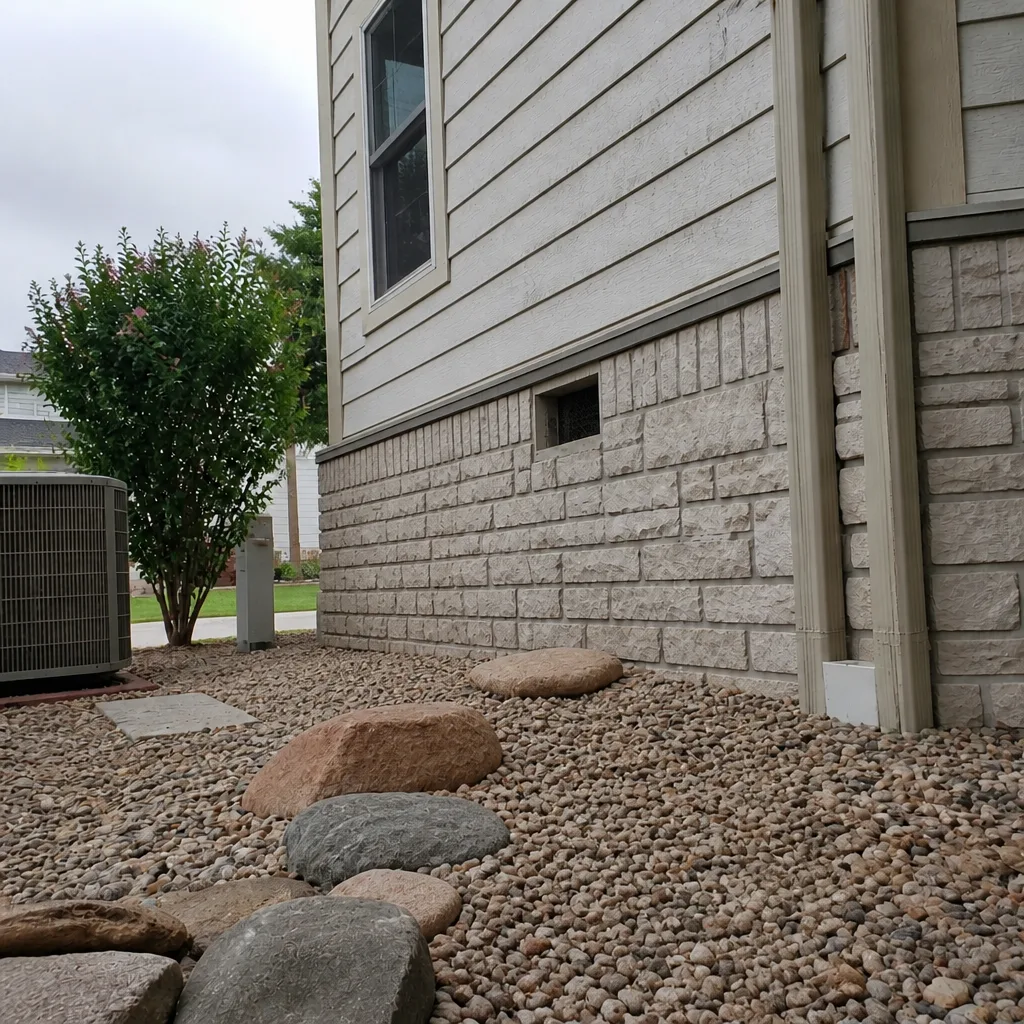
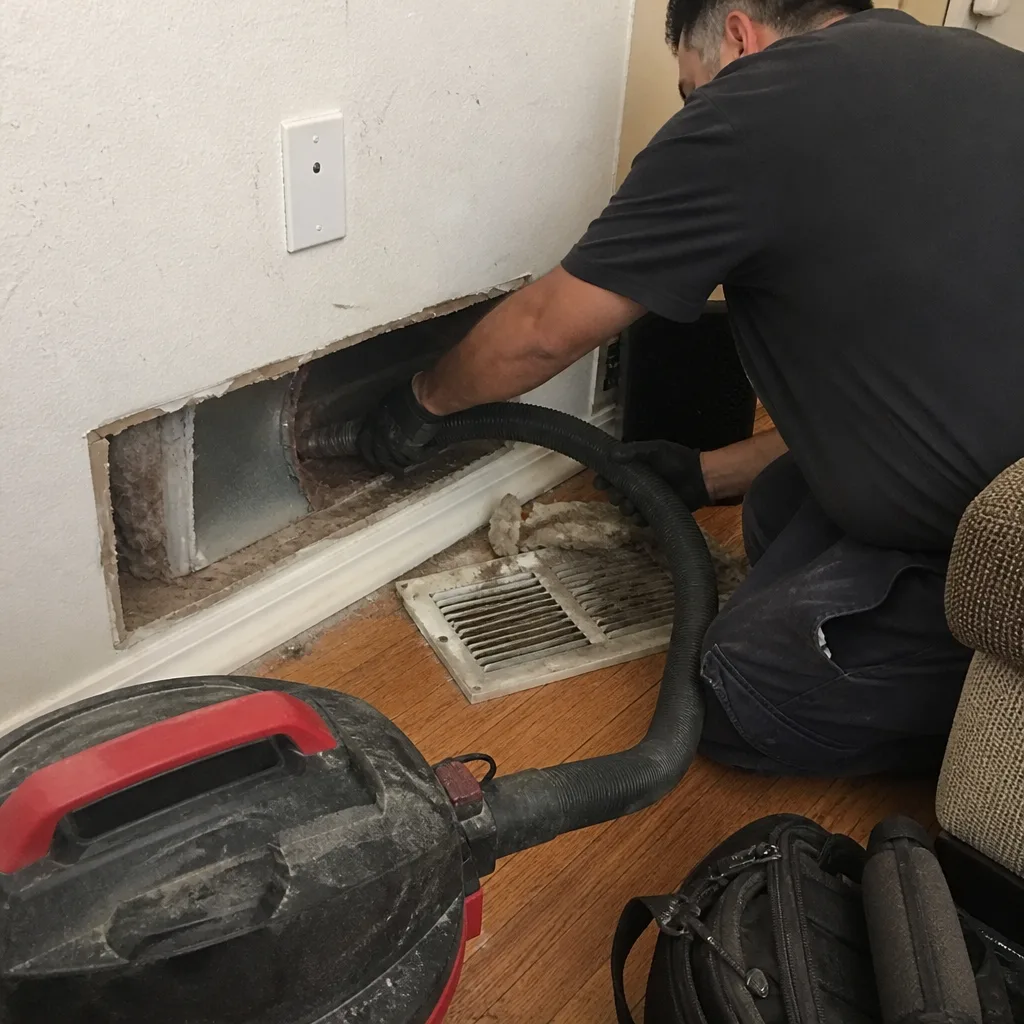
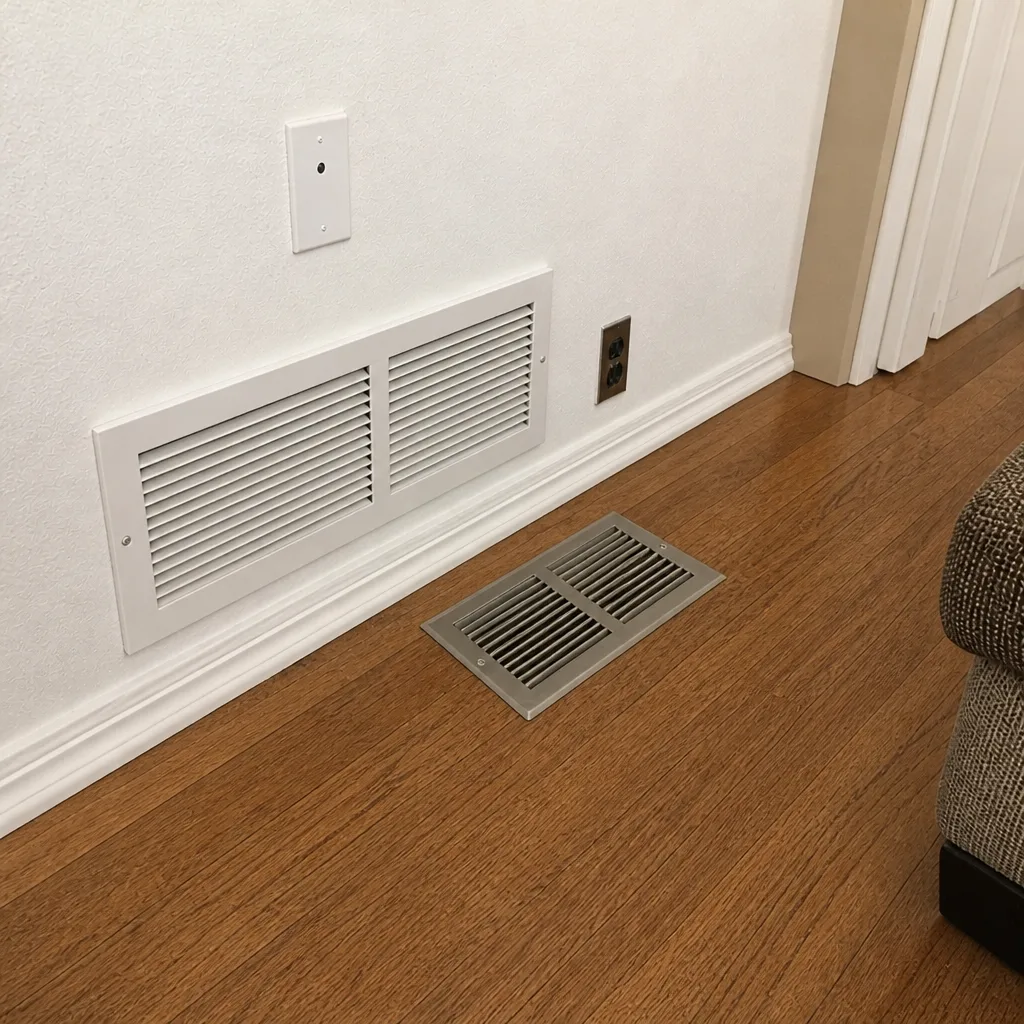
Whole-system duct and dryer vent check with before-and-after photos - you see exactly what came out of your vents
That "$99 whole-house special" is a bait ad - the real number appears once they are in your hallway, or the "clean" is a shop-vac at the register. We photograph the inside of your ducts before and after instead.
Air Duct Cleaning Emergency Preparedness Guide for Highlands Ranch Homes
Smoke smell fades long before the particles are gone. That’s the part most homeowners miss after a Front Range wildfire season. By the time the air in a Highlands Ranch house smells normal again, fine ash and soot can still be sitting in the supply trunks, the return plenum, and the flexible runs feeding the upstairs bedrooms. You can’t smell them and you can’t see them, but every time the furnace or AC fan kicks on, they move. This guide covers how to prepare your duct system before wildfire season, flash flooding, or a long summer outage, and exactly what to do with the ducts afterward. We’ll walk through the smoke protocol, the moisture timeline, power-outage effects, insurance documentation, and who to call in what order.
Quick Answer
Duct system emergencies in Highlands Ranch fall into three categories: wildfire smoke infiltration, water intrusion from flash flooding, and condensation problems triggered by extended power outages. Each needs a different response. Smoke residue can stay viable in ductwork for weeks after the smell fades and needs agitation plus HEPA capture, not just a blower. Water in ducts starts growing mold within 24 to 48 hours and often means the ducts can’t be cleaned back to safe condition. Outages leave condensation sitting in humidified systems that re-wets dust the moment airflow returns. Document your ducts now, know which contractor to call for which event, and you’ll skip the upselling that follows most Front Range disasters.
Styles & brands we work with
- Whole-home duct cleaning
- Dryer vent cleaning
- Camera inspection
- Sanitizing & deodorizing
Table of Contents
- Post-Wildfire Smoke Protocol for Highlands Ranch Ducts
- Flood and Moisture Events: The Mold Timeline
- What Extended Power Outages Do to Your HVAC System
- How to Document Your Ducts Before Emergency Season
- Who to Call in What Order After an Emergency
- Why Equipment Choice Determines Emergency Response Quality
- Dryer Vent Emergencies Most Homeowners Overlook
- A Season-by-Season Preparedness Calendar for Highlands Ranch
Post-Wildfire Smoke Protocol for Highlands Ranch Ducts
The instinct after a smoke event is to run the system to “clear the air.” That’s usually the wrong move while the smoke is still present outdoors. A standard HVAC filter catches some particulate, but running the fan during heavy smoke pulls outside air into the return before the filter has a chance to do its job. Fine ash loads up faster than a filter can trap it, and the unfiltered share ends up coating the inside of the supply trunks. Once airflow stops, that coating dries, and the oily fraction of the smoke residue starts binding to the metal and flexible duct walls.
Here’s the sequence we walk homeowners through:
- During the smoke event: shut the system down if your home is tightly sealed and you have a portable air cleaner running. Set the thermostat to “fan off.” If you must run it, use the highest MERV rating your system can handle and change the filter the moment the smoke clears.
- First 48 hours after smoke clears: replace the filter, but don’t assume that fixes it. The filter protects the equipment downstream of it, not the return trunks upstream.
- Days 2 through 30: watch for the smoke smell re-appearing the moment the system runs. That is the tell that residue is sitting on duct surfaces and getting pushed into the airstream.
- Week 3 to week 6: get a professional inspection. If residue is present, it needs mechanical agitation plus containment. A vacuum alone scrapes the surface and leaves the bonded oil.
Why the timing matters: the oily fraction of wildfire smoke doesn’t just sit there. It bonds more firmly to metal, fiberglass duct liner, and flex duct over weeks. By the time the residue is three months old, it takes more passes to remove and often reveals that some flex duct runs need replacing because the residue absorbed into the inner liner itself. In Highlands Ranch, where homes are typically sealed tight against summer heat and winter cold, that residue stays trapped longer than in older, draftier housing stock. The dry air helps in one way (less moisture to feed mold) and hurts in another (residue dries hard and bonds tight).
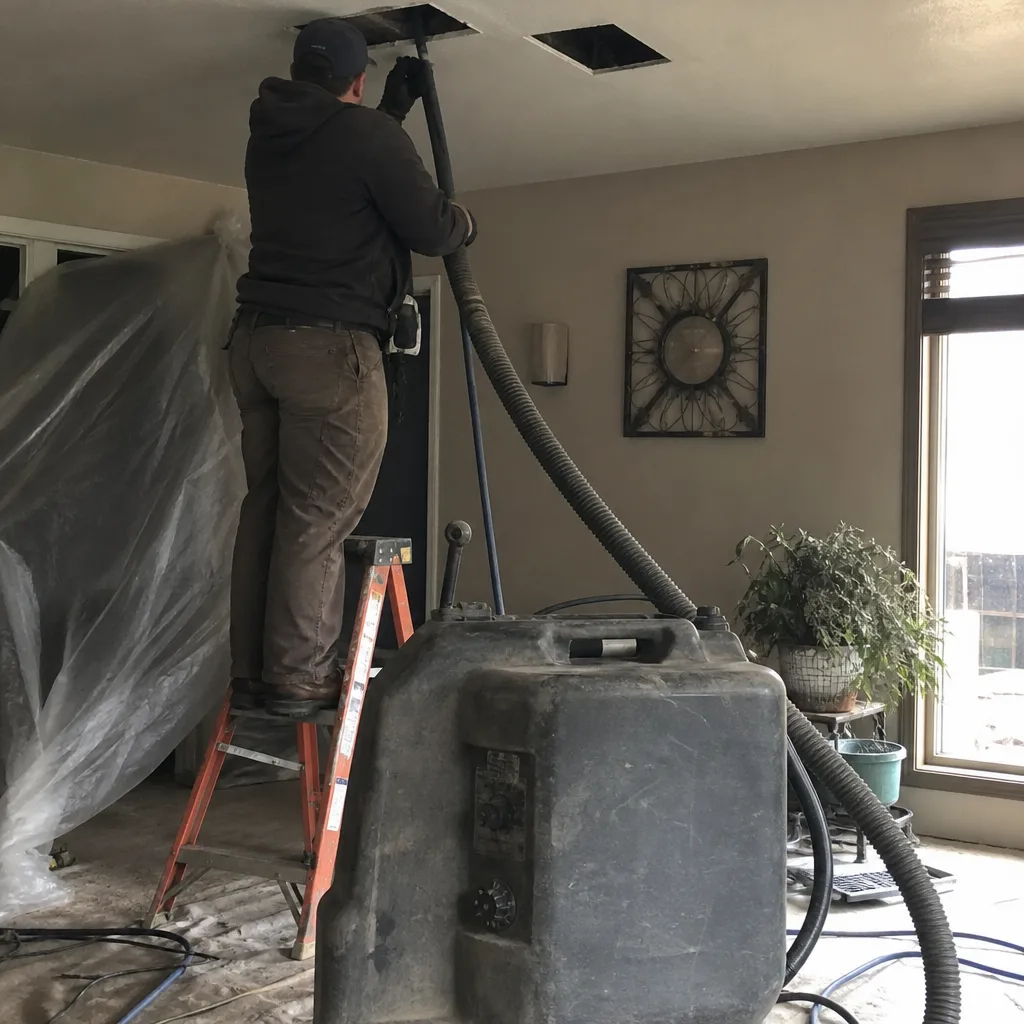
What cleaning method actually addresses it: rotary brushing with a soft or medium bristle inside a sealed containment setup, followed by a HEPA vacuum pulling 100 percent of the dislodged material out of the system. That’s the combination an air duct cleaning service should be running. A shop-vac hose down the duct does nothing. A consumer-grade shop blower just redistributes the residue into the living space.
Flood and Moisture Events: The Mold Timeline
Highlands Ranch sits along Plum Creek, and the Front Range has a habit of dumping a summer’s worth of rain in an afternoon. When water gets into a crawlspace or basement and reaches ductwork, the clock starts. Mold colonizes wet duct surfaces within 24 to 48 hours. Not days, not a week. That’s why the response to water-in-ducts is different from the response to smoke: there’s no waiting for the smell to fade and checking back in three weeks.
What compromises a duct system after water intrusion:
- Flex duct: water wicks into the inner liner and the insulation jacket. It cannot be dried or cleaned back to safe condition. Flex runs that got wet need replacing, not cleaning.
- Rigid sheet-metal trunk lines: sometimes salvageable. Water can pool in low sections and the interior can be dried and cleaned if the work is done before mold establishes.
- Fiberglass duct board and lined plenum: the liner is porous. Once wet, the foam or fiberglass stays damp in a Colorado crawlspace because the air never gets hot enough to dry it out. Usually replacement.
- Register boots and grilles: removable, cleanable, but if they sat in standing water, sanitize or replace.
The first 24-hours call is whether to try to save the duct system or replace wet sections. A professional duct inspection decides that. The relevant question isn’t “does it look dry?” It’s “did moisture reach the inner surface of the duct?” That’s a camera inspection, not a flashlight pointed at the grille.
One more local wrinkle: Highlands Ranch homes tend to run ductwork through unconditioned attic space, not just crawlspaces. A roof leak, a clogged condensate drain, or a poorly seated exhaust boot can wet attic ducts too. If you notice water stains on ceiling drywall after a summer storm, check the attic duct runs as well. Cleaning an attic duct run that sat wet for two weeks is usually a waste of money. Replacing that section and then cleaning the rest is the correct order.
What Extended Power Outages Do to Your HVAC System
Colorado summers deliver multi-hour and sometimes multi-day outages. When the AC goes silent, several things happen inside your ductwork that don’t happen in a normal day. We’ve watched homeowners miss this one for a couple of reasons: the ducts return to “normal” once the power comes back, and the damage shows up weeks later as a function issue that gets blamed on the equipment instead of the ducts.
Here’s what happens during a long outage in Highlands Ranch’s summer climate:
- Condensation re-wets dust. The evaporator coil dries out as the system sits idle. Residual moisture that dripped into the drain pan or the plenum during normal operation stops draining and starts re-evaporating into the supply ductwork. Any dust that was sitting on the coil surface or inside the plenum becomes a thin sticky film.
- Humidified air has nowhere to go. If you run a whole-home humidifier from Honeywell or Aprilaire, the pad stays loaded with water. A long outage leaves the pad a damp microbially active surface. When the system restarts, the fan pushes humid air into the ducts.
- Attic heat bakes the ducts. If ducts run through an unconditioned attic that hits 130°F or more during an outage, the flexible runs cycle through expansion and contraction. That can loosen joints and clamps, especially on older installs, and open up leaks that weren’t there before.
- The restart surge stirs everything. When power returns, the system kicks on and pushes airflow through whatever pooled moisture, loose debris, and dislodged material is sitting in the ducts. The first hour after a long outage is the dirtiest air-hour in the system’s year.
The fix is not complicated. After any outage over four hours in summer, run the fan on low for a few hours with the windows closed and change the filter within a day or two. After an outage over 24 hours, get an inspection. A camera pass across the coil, the plenum, and the main trunk will tell you whether you’re in “filter change” territory or “professional cleaning” territory.
How to Document Your Ducts Before Emergency Season
Insurance claims after a smoke or flood event go smoother when the homeowner has evidence of pre-event condition. Most ductwork damage gets denied or partially denied because the adjuster can’t establish whether the ducts were already compromised. The documentation task is small and takes maybe an hour. Do it in spring, before the first smoke event or storm of the year.
Photos to take:
- Each return register grille with the cover removed so the visible interior is clear.
- Each supply register with the grille removed and a flashlight aimed at the duct surface.
- The furnace plenum area with the access panel open (power off, filter pulled).
- The evaporator coil housing, if your install makes it visible.
- Any flexible duct runs visible in the attic or crawlspace, especially where they connect to trunk lines.
- The condensate drain line and the drain pan.
- Any humidifier pad and water supply connection, from Honeywell or Aprilaire systems.
- A wide shot of the HVAC closet or mechanical room the day each photo is taken.
Label each photo with the room name and the date. Store the set in a cloud folder you can pull up on a phone if you’re ever standing in front of an adjuster with a wet crawlspace behind you. If you’re a property manager with multiple Highland Ranch units, do the same by address and keep a separate folder per building.
Pair the photo set with a written record. What filter you’re running and when it was last changed. When the ducts were last cleaned, if ever. Any known issues a technician has flagged. That one-page file converts a vague insurance conversation into a specific one and shortens the gap between damage and remediation.
Who to Call in What Order After an Emergency
The most common money-losing mistake after a Highlands Ranch wildfire or flood is calling whoever answers first. Remediation companies, HVAC contractors, and duct cleaning specialists all show up with a different scope. Calling in the wrong order invites overlapping work and one of the contractors telling you that the other’s scope wasn’t enough.
The order that keeps the work honest:
- Stop the source first. Flood: cut the water, dry the standing water, and get airflow moving in the affected space. Wildfire: wait until outdoor air quality is safe. Outage: restore power cleanly and let the system run normally. Until the source is under control, nothing else helps.
- HVAC contractor, only if equipment was affected. If the furnace, coil, or blower sat in water or in smoke that got into the equipment cabinet, the unit needs evaluation. Do not skip this step if you saw water in the mechanical closet or smoke inside the furnace housing.
- Duct cleaning specialist next. This is the “clean what can be saved and identify what can’t” step. A professional camera inspection and cleaning scope tells you which sections are salvageable and which are not.
- Mold assessor, only if visual or camera evidence shows growth. This is where upselling happens. An assessor is not the same person doing the cleaning on most jobs. Independent assessment protects you.
- Replacement of compromised sections. Flex duct that got wet, sheet metal that has deep mold in a fiberglass liner, sections with structural damage from water or heat. Cleaning cannot restore these.
How to avoid being upsold: get the cleaning scope in writing before any work starts. The scope should say exactly which runs are being cleaned, which are being inspected, which are being replaced, and what’s included in containment, brush work, and HEPA capture. If a company can’t list those items on paper before the work starts, keep calling.
Two more specifics for Highlands Ranch homeowners. If you’re filing insurance, get the cleaning scope in writing before remediation work begins so the adjuster can approve or deny the exact scope. If you’re paying out of pocket, ask each contractor for the price per duct system, not per vent, because per-vent pricing is where low bids turn into larger invoices once the tech is on site. A flat price per system, agreed before work starts, with before-and-after photos of your own ducts at completion, is the honest structure.
Why Equipment Choice Determines Emergency Response Quality
The difference between a competent duct cleaning and a bad one is almost entirely equipment and containment. Two crews can clean the same house with the same scope on paper, and one leaves the ducts genuinely clean while the other redistributes what was already there. After a smoke or moisture event, the gap widens fast because there’s more material to move and more of it bonds to duct surfaces.
What professional emergency response looks like in practice:
- Rotary brush systems (Rotobrush): mechanical agitation on the full interior surface of each duct run. Brushing is the only thing that breaks up bonded smoke residue and dried particulate film. A vacuum alone does not.
- HEPA vacuum units (Nikro): captures the dislodged material at HEPA filtration grade rather than passing it back into the room. This is the capture side of the equation.
- Negative-air containment (Abatement Technologies): puts the work area under negative pressure so loosened debris is pulled into the capture unit rather than recirculating into the living space. This matters most in post-wildfire and post-water work, where the material being disturbed is exactly what you don’t want in the air.
- Camera inspection: lets the technician see the coil, the plenum, and the main trunks, and lets you see before-and-after photos of your own system, not stock images.
At Remington Air Duct Cleaning, the working proof point is “captured, not recirculated.” That’s what our equipment stack is for. Rotobrush rotary brush systems agitate the full duct surface, Nikro HEPA vacuums capture the dislodged material, and Abatement Technologies negative-air containment holds the work zone so nothing goes back into the return air. Our technicians have up to 8 years of experience with these systems, and we use them on every job, including the post-emergency calls where a shop-vac approach would make things worse. This isn’t a sales pitch. It’s an explanation of why the equipment list matters when you’re deciding who to call about smoke or water in a Highlands Ranch duct system.
Dryer Vent Emergencies Most Homeowners Overlook
Duct emergencies don’t only come from outside events. The highest-risk duct in most Highlands Ranch homes is the one behind the dryer. Lint accumulates on the interior walls of the vent line, and each cycle adds to the layer. The U.S. Fire Administration lists dryer vent failure as a leading cause of residential fires, and the reason it climbs into emergency territory is that lint ignites and the flame propagates through the vent exterior faster than most people realize.
Warning signs that say “call now” rather than “call eventually”:
- Clothes take noticeably longer than usual to dry, especially on a cycle that used to finish fast.
- The exterior of the dryer is hot to the touch during operation.
- You smell burning or see lint around the termination cap outside.
- The vent termination flap doesn’t open fully when the dryer runs.
- Lint is visible inside the flexible transition hose behind the dryer, or the hose is kinked.
Preparation matters here too. Know where your vent terminates outside the house. Keep the exterior termination cap clear of snow and debris. Never sleep with the dryer running. And know the difference between “cleaning the lint trap” and “cleaning the vent line,” because the trap catches maybe a fraction of what the line holds. A dedicated dryer vent cleaning service addresses the full run, including the transition hose and the exterior termination, and does it with a rotary brush and vacuum rather than a shop vac held to the outside flap. This isn’t an air-quality task. It’s a fire-safety task, and it belongs in the same emergency-prep file as the duct photos.
A Season-by-Season Preparedness Calendar for Highlands Ranch
Emergency preparedness in Highlands Ranch is a calendar, not a checklist you do once. The risks change with the season, and each risk has a different prerequisite. Here’s the calendar we walk homeowners through:
Spring (before smoke season)
- Document the duct system with photos and a written record of filter type and last cleaning date.
- Replace the HVAC filter and stock a spare at the highest MERV your system accepts.
- Clean the dryer vent if you can’t recall the last time it was done.
- Schedule a duct inspection if the home has never had one, especially after any previous renovation.
Summer (smoke and storm season)
- Know your system’s shut-off point so you can run “fan off” during a heavy smoke event.
- Keep windows closed on smoke days and run a portable cleaner if you have one.
- Change the filter within 24 hours of any smoke event ending.
- After any summer storm, check for water stains in attics and crawlspaces, and call for a duct inspection if water is visible near ducts.
- After any power outage over four hours, run the fan on low for a few hours before regular use.
Fall (pre-outage and pre-heat season)
- Schedule a duct inspection if you’re not sure the ducts are structurally sound.
- Replace the humidifier pad on Honeywell or Aprilaire systems before the heating season starts.
- Check that the dryer vent termination is clear before cold weather arrives.
Winter (indoor air and duct integrity season)
- Watch for smoke smell returning when the furnace runs, and call for a duct cleaning inspection if it does.
- Inspect the exterior dryer vent cap for snow blockage before each storm cycle.
- Keep the photo record and filter log current. Insurance claims in the year ahead will use them.
Common Mistakes to Avoid
- Running the HVAC system during a heavy smoke event. The filter catches some particulate, but the unfiltered share ends up coating the interior of every duct run downstream and upstream of it. Shut the fan off while the smoke is present.
- Assuming a smell clearing means the smoke is gone. The oily fraction of wildfire smoke bonds to duct surfaces over weeks. If the smell fades but the system still pushes an off smell on restart, the residue is still there and a filter change won’t remove it.
- Cleaning ductwork that was in standing water. Mold colonizes wet ducts within 24 to 48 hours. Cleaning a duct that’s still wet, or that sat wet for two weeks before the call, spreads the problem instead of solving it. Get an inspection first and replace what can’t be saved.
- Skipping the “who do I call first” plan until it’s needed. After a Highlands Ranch hail or flood event, remediation companies call back within an hour while duct specialists are booked out. Knowing the order in advance keeps you from paying for overlapping work.
- Not documenting ducts before the emergency. Adjusters need pre-event condition to approve a claim. Photos taken after the boiler closet is dry say nothing about what the ducts looked like before.
- Treating the dryer vent as a “someday” task. Dryer vent fires move through the vent line itself. Lint layer, hot dryer, running cycle, no vent clearance. Treating it as a separate, low-priority job is a fire-safety mistake, not just an air-quality one.
- Accepting a per-vent quote over the phone. Per-vent pricing is where low bids turn into larger invoices once a technician is on site. Ask for a flat price per system, in writing, before work begins.
See the difference
 Before
 After
 Before
 After
 Before
 After
When to Call a Professional
Call a professional duct service immediately if water reached a crawlspace or attic duct run, if you smell smoke in the airstream weeks after a wildfire event, if the furnace or coil housing was flooded, or if you can see or smell mold inside any register or duct run. Call after any outage over 24 hours in summer, and call before any renovation that removes drywall or disturbs insulation near duct runs. Call for dryer vent cleaning whenever the dryer runs hot, the clothes take longer to dry, or the exterior termination shows lint buildup. If you’re unsure whether you’re in “clean” territory or “replace” territory, call for an inspection and a written scope before agreeing to work. Remington Air Duct Cleaning offers free estimates in Highlands Ranch. Call (866) 890-5531. We answer 24/7, and fast dispatch from 7am to 7pm, Sunday through Friday, means we can get eyes on the system the day you call during that window. Our technicians have up to 8 years of experience with Rotobrush, Nikro, and Abatement Technologies equipment, and we can evaluate Honeywell and Aprilaire systems alongside the ducts.
Frequently Asked Questions
Wildfire smoke residue can stay in ductwork for weeks to months after the smell fades. The visible soot and the heavy odor dissipate faster than the fine particulate and the oily fraction, which bond to metal and flex-duct surfaces over time. In sealed Highlands Ranch homes, the residual stays longer because there’s less air exchange to move it. If the smell returns when the system runs, the residue is still there and needs professional agitation and HEPA capture, not another filter change.
Not always, but you need an inspection to know. If water only reached the crawlspace floor and never touched duct surfaces, cleaning isn’t the right response. If water soaked the insulation around flexible duct runs, entered a sheet-metal trunk, or reached the coil or plenum, wet sections need replacement and the rest needs cleaning. Mold can establish on wet ducts in 24 to 48 hours, so get an inspection in the first day or two if water may have reached the ductwork.
No, shut the fan off during heavy smoke if you can seal the house and run a portable air cleaner. Running the fan with the outdoor air quality poor pulls smoke into the return and loads the filter faster than it can capture. If the house becomes too hot and you have to run the system, use the highest MERV filter your equipment accepts and change it within 24 hours of the smoke event ending.
Visual inspection is not enough. Mold can sit inside the duct liner where a flashlight won’t show it, and the smell test isn’t reliable. A camera inspection of the ducts, the coil housing, and the plenum is the only way to confirm or rule out mold growth after a water event. If growth is confirmed, the mold assessment should be independent of the cleaning scope so the person evaluating the problem isn’t the one selling the remediation.
After the power comes back, run the fan on low for two or three hours with windows closed, then change the filter within a day or two. The system has sat through pooled moisture, a possibly wet humidifier pad, and attic heat cycling on the duct runs. Running low airflow first pushes some of the overnight humidity out of the system before full cooling load. Any outage over 24 hours deserves a camera inspection to rule out coil or plenum issues before declaring the system ready for full operation.
You can document your ducts yourself for insurance baseline purposes. Photograph each register with the grille off, the furnace plenum, any visible attic or crawlspace runs, and the condensate drain line, then label each photo with the room and the date. A professional inspection adds the interior camera footage and a written condition report, which carries more weight if a claim is disputed. Doing the self-documentation in spring costs an hour and covers the baseline; the professional inspection goes one step further and can pair with cleaning or repair work. For more information about the services we offer in Highlands Ranch, or to see how our other guides fit into the broader Remington Air Duct Cleaning approach to duct care, we’re glad to talk it through on the phone.
The Bottom Line
Duct emergencies in Highlands Ranch are predictable, and that’s what makes preparation worth the hour. Smoke residue lingers long after the smell fades, water in the ducts turns into mold in 24 to 48 hours, and long power outages leave condensation and loosened joints in their wake. Each needs a different response, and each goes better if you’ve documented your system before the event and know which contractor to call first. The most useful prep steps are the smallest: photos of the ducts in spring, a filter change within a day of any smoke event, an inspection after any flood or outage that reached the system, and a professional dryer vent cleaning on a schedule you don’t have to remember. Professional equipment, including Rotobrush, Nikro, and Abatement Technologies, is what separates real cleaning from redistribution. When ducts need attention, call Remington Air Duct Cleaning at (866) 890-5531 for a free estimate. We answer 24/7, fast dispatch from 7am to 7pm, Sunday through Friday. One flat price per system, agreed before work starts, with before-and-after photos of your own ducts at the end.
Written by the team at Remington Air Duct Cleaning.