
Last updated November 16, 2026
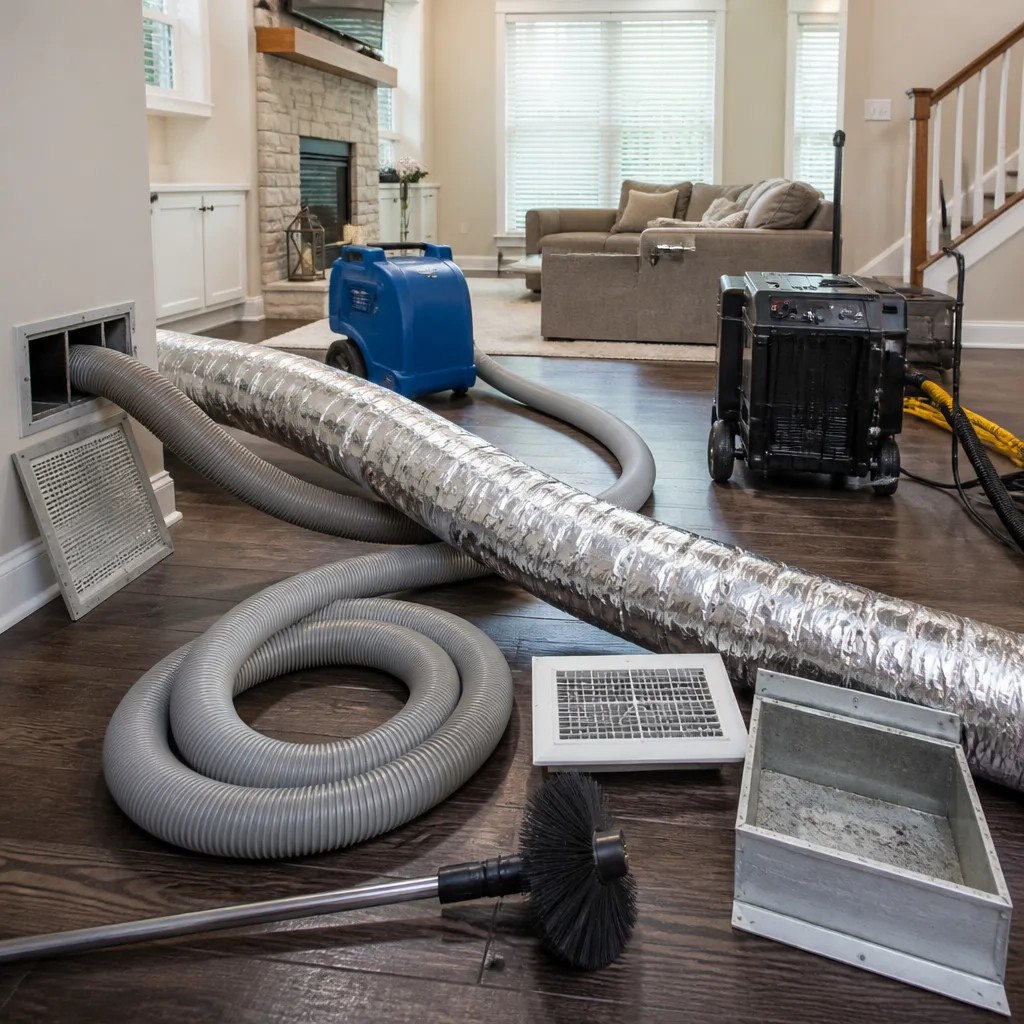 Whole-home duct cleaning
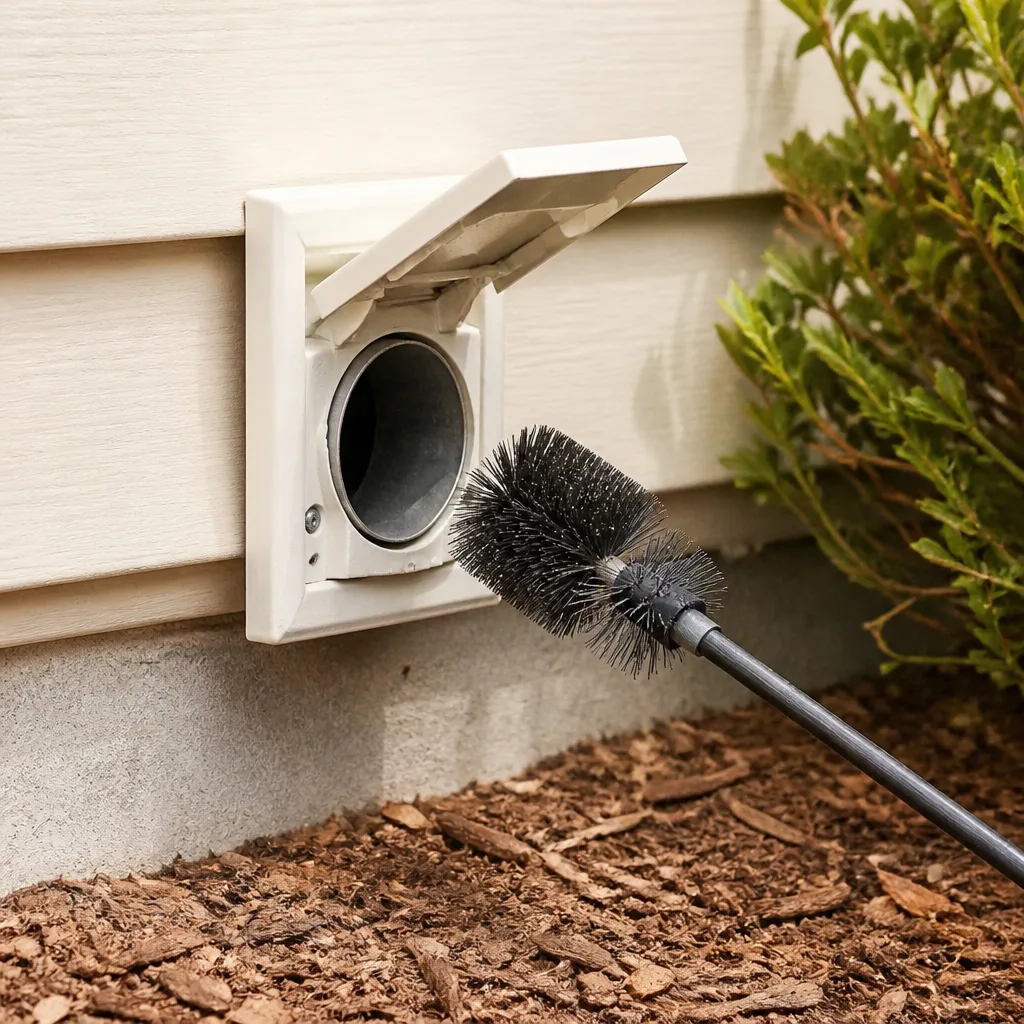 Dryer vent cleaning
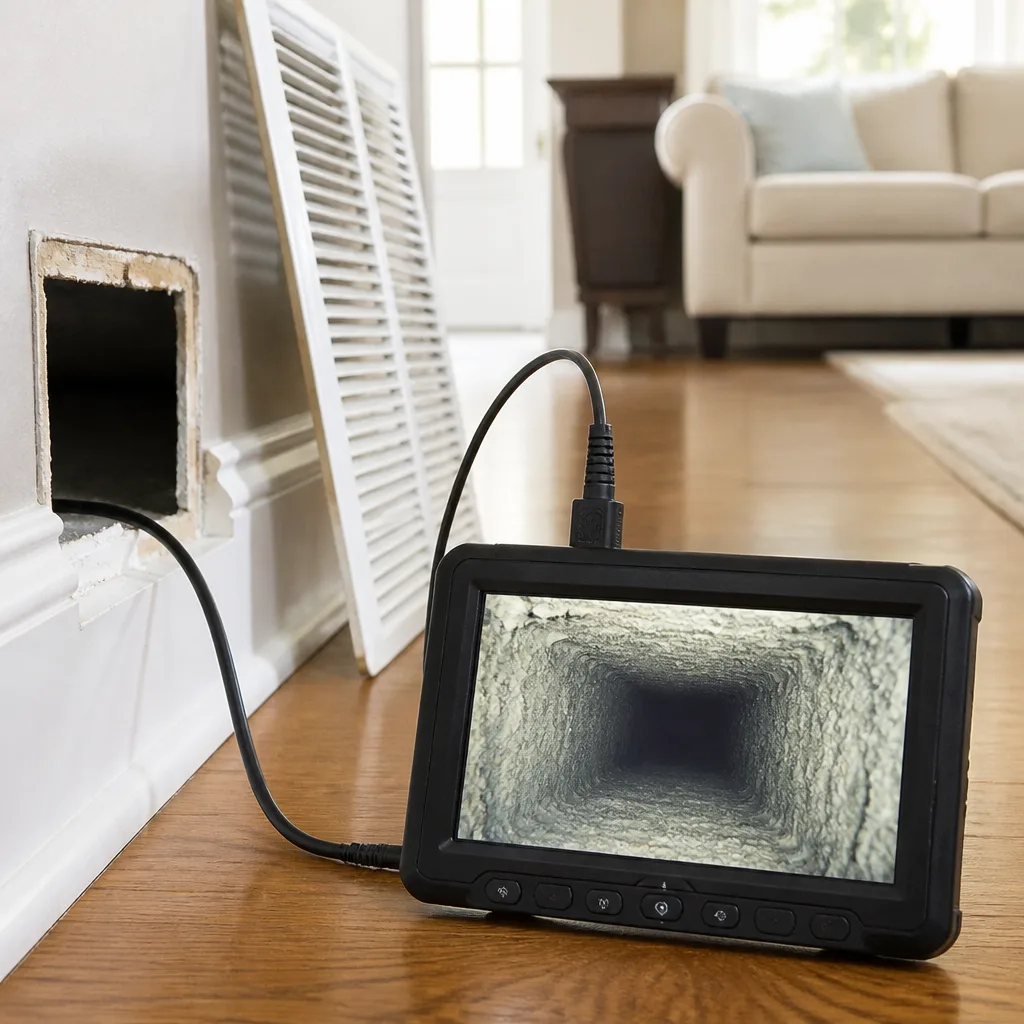 Camera inspection
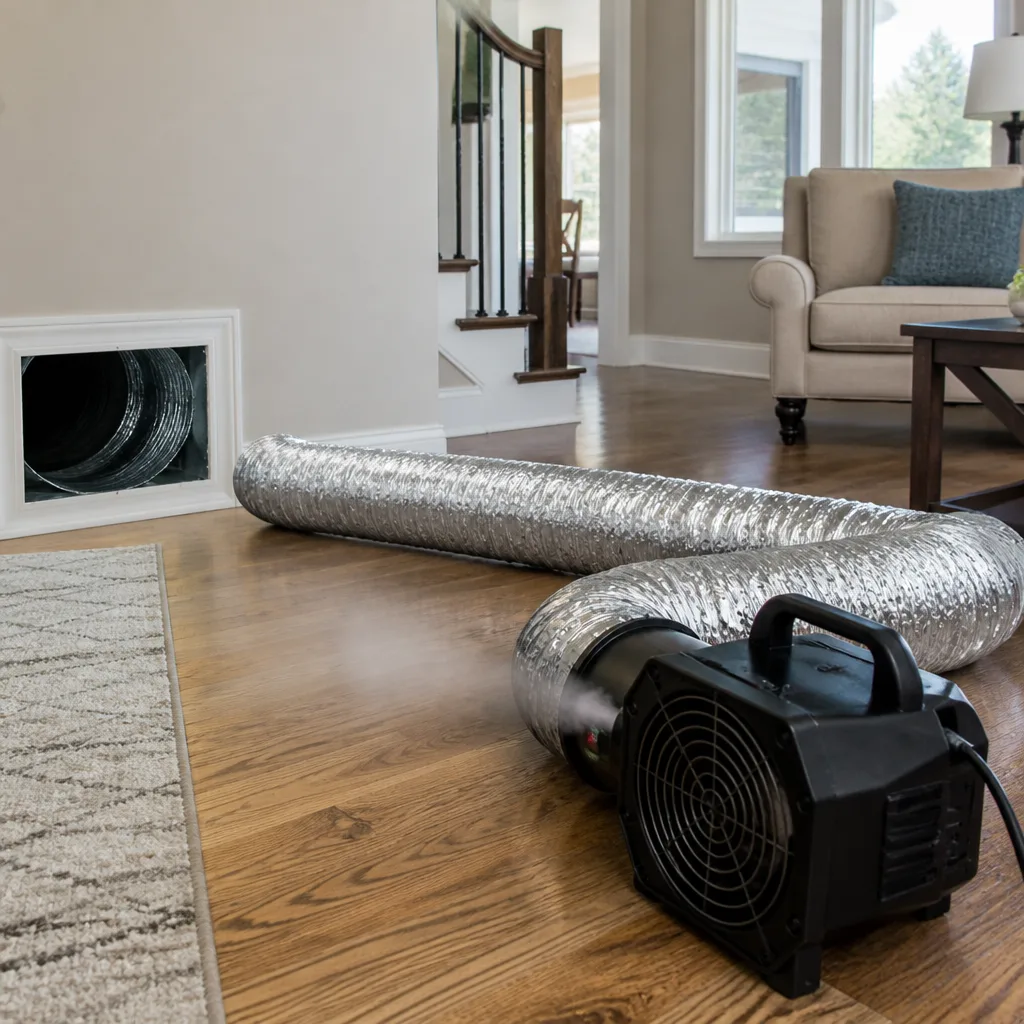 Sanitizing & deodorizing
Whole-system duct and dryer vent check with before-and-after photos - you see exactly what came out of your vents
That "$99 whole-house special" is a bait ad - the real number appears once they are in your hallway, or the "clean" is a shop-vac at the register. We photograph the inside of your ducts before and after instead.
The Complete Guide to Air Duct Cleaning in Highlands Ranch
Most homeowners assume their ducts stay clean because the air filter catches everything. It doesn’t. Standard filters capture a slice of the larger particles and let the fine fraction ride straight through, and in Highlands Ranch that fine fraction has a habit of settling on duct walls instead of leaving the system. Tucked under the leaky flex duct of a 2003 build, that coating doesn’t announce itself. It builds quietly until someone in the house starts sneezing every morning or the furnace starts cycling short. This guide walks through what a complete cleaning actually involves, what equipment separates a real job from a surface wipe, and what the high-altitude, low-humidity conditions along the Front Range mean for ductwork in this part of Douglas County.
Quick Answer
A complete duct cleaning in Highlands Ranch means agitating the full duct system with a rotary brush, pulling the loosened debris out under negative-air containment, and cleaning the supply runs, the return runs, and the plenum in a single visit. Surface vacuuming or a quick pass with a shop vac isn’t the same service. The climate here, at roughly 5,900 feet elevation with low humidity and heavy wildfire-smoke seasons, loads ductwork with fine particulate faster than most lower-elevation Front Range cities, so what’s sitting inside matters more than most homeowners expect.
Styles & brands we work with
- Whole-home duct cleaning
- Dryer vent cleaning
- Camera inspection
- Sanitizing & deodorizing
Table of Contents
- Why Highlands Ranch Climate Loads Ducts Differently
- What Equipment a Complete Cleaning Requires
- Supply Ducts, Return Ducts, and the Plenum: Why All Three Matter
- Red Flags in Highlands Ranch Housing Stock
- What a Full Cleaning Visit Looks Like, Step by Step
- Before-and-After Documentation: What It Should Show
- Dryer Vent Cleaning: The Safety Service Most Companies Skip
- When the Ductwork Itself Needs Repair, Not Just Cleaning
Why Highlands Ranch Climate Loads Ducts Differently
Air at 5,900 feet holds less moisture than air at 5,000 feet, and Highlands Ranch sits in the rain shadow that shapes the whole western edge of Douglas County. Lower humidity sounds like good news for a house, and in some ways it is. For ductwork, it changes what happens to dust. Dry particles stay airborne longer, drift farther through the return system, and settle onto duct walls as a fine, powdery layer rather than the damp clumps you’d see closer to sea level. That layer is easy to disturb and hard to capture without the right equipment.
Then comes smoke season. When wildfire smoke settles over the Front Range, the particles that make it past the filter are the smallest ones, and they’re exactly the size that clings to duct surfaces. We’ve seen the pattern repeat across Highlands Ranch neighborhoods like Northridge, Westridge, and Backcountry: a summer of smoke, a fall of furnace startup, and by winter the return plenum is carrying a visible grey film that wasn’t there in spring.
The practical takeaway is that Highlands Ranch ductwork tends to accumulate fine particulate faster than a comparable house in a more humid, lower-elevation city. That doesn’t mean every home needs cleaning every year. It does mean the “clean it once every decade” advice you’ll find in generic guides doesn’t map cleanly onto this climate. Homes near open space, homes with pets, and homes where someone has allergies tend to notice the buildup sooner.
What Equipment a Complete Cleaning Requires
Truck-mounted vacuums pull a lot of air and they look impressive in a driveway. Alone, they don’t finish the job. A vacuum creates suction at one point in the system; it doesn’t reach around corners, behind fittings, or into the folds of flex duct. What actually removes the debris is mechanical agitation combined with containment, and that requires a specific tool stack.
Here’s what a professional setup includes and why each piece matters:
- Rotary brush agitation (Rotobrush). A rotating brush head travels the length of each run and physically scours debris off the duct walls. Suction alone can’t lift a bonded film. The brush breaks it loose so the vacuum can capture it.
- High-capacity HEPA vacuum (Nikro). Once debris is airborne inside the duct, something has to pull it out and hold onto it. A HEPA-rated vacuum captures fine particulate rather than exhausting it back into the room.
- Negative-air containment (Abatement Technologies). This is the piece most homeowners never see and most low-bid outfits never bring. Negative-air equipment keeps the working zone under slight pressure so dislodged debris is captured at the source instead of drifting into living space the moment a register is opened.
- Register and vent covers, plus access tools. Every supply and return opening gets sealed during the work, and every cut access point gets properly closed afterward.
That last point separates a careful job from a rushed one. If a contractor opens registers without containment running, the fine dust you’re paying to remove ends up settling on your furniture instead. Captured, not recirculated, is the whole principle.
Supply Ducts, Return Ducts, and the Plenum: Why All Three Matter
A duct system has two halves doing opposite jobs, and a plenum tying them to the equipment. Cleaning one half and skipping the other is one of the most common shortcuts in this trade.
Supply ducts carry conditioned air from the furnace or air handler out to each room. These are the runs you see at every register. They collect dust as air moves through, and they’re the easiest to reach, which is why they’re the only part some companies clean.
Return ducts pull air back toward the equipment. Because air moving into a return is drawn from the whole room, returns tend to load heavier than supplies. If a return is left uncleaned, the system keeps pulling that debris back toward the blower and the filter, shortening filter life and stressing the equipment.
The plenum is the box where the duct system meets the furnace or air handler. It’s upstream of everything else and often the dirtiest single component, because it sees the full air volume before any split into individual runs. Cleaning supplies without cleaning the plenum leaves the system’s biggest reservoir untouched.
All three need to come clean in one visit. If a quote only mentions “the vents,” ask which components that covers. A job that cleans supplies only is doing a third of the work, and the returns and plenum will recontaminate the rest within a season or two.
Red Flags in Highlands Ranch Housing Stock
Highlands Ranch grew fast through the late 1990s and 2000s, and a large share of the housing built between roughly 1995 and 2010 used flex duct for at least part of the distribution system. Flex duct is fine when it’s installed well, but it ages in specific ways that change how a cleaning needs to be handled.
What to watch for in a Highlands Ranch home:
- Sagging flex runs. Flex duct draped without proper support sags into a low spot, and condensation and debris collect at the bottom. A brush can navigate a properly supported run; a sagging one can tear.
- Crushed sections behind the air handler. Flex duct pinched during installation or crushed later restricts airflow and traps debris at the pinch point.
- Disconnected or slipped joints. A flex run that has pulled away from its collar dumps air into a wall cavity or attic rather than the room. That shows up as a room that never heats properly and a duct system pulling in whatever is nearby.
- Ripped inner liner. Flex duct has an inner liner that must stay intact. A torn liner should be repaired or the section replaced before or alongside cleaning, not cleaned around.
- Original builder-grade ductboard plenums. Many homes from this era have ductboard plenums that slowly deteriorate at the seams. Cleaning one that’s already breaking down does more harm than good.
We find at least one of these in a fair share of Highlands Ranch homes inspected for cleaning. None of them are reasons to panic. They’re reasons to have someone look before the brush goes in, so the cleaning method matches the ductwork in front of it.
What a Full Cleaning Visit Looks Like, Step by Step
A complete cleaning follows a sequence. Skipping a step is where quality falls off. Here’s the order a professional job should follow:
- Inspection and scope. Every accessible run gets checked for condition and the red flags above. Access points are identified. The estimate is confirmed before work begins.
- Containment setup. Negative-air equipment is placed and running before any register is opened, so loosened debris is captured from the first minute.
- Register and vent sealing. Every opening is covered and taped. This seals the working zone.
- Agitation. A rotary brush travels each supply and return run, working the walls and dislodging buildup. The brush is matched to the duct type; flex duct needs a lighter touch than rigid metal.
- Extraction. The HEPA vacuum pulls the loosened debris out of the sealed system under containment, so it never enters the room.
- Plenum cleaning. The plenum and the connections at the air handler get cleaned directly, since these see the most traffic.
- Final inspection and resealing. Access points are closed and sealed. The system is run to confirm airflow before we leave.
This is not a thirty-minute service. Agitating a full residential system and pulling the debris out takes time, and a company that’s in and out in under an hour either skipped the returns, skipped the plenum, or skipped containment entirely.
Before-and-After Documentation: What It Should Show
A reputable contractor documents the work without being asked. If a company finishes and hands you a bill with no photos, ask for the images before you pay. A real before-and-after record does three things:
- Shows the same location before and after. Not a generic stock photo. A frame of a specific return or plenum, then the same frame after cleaning, with the ductwork recognizable in both.
- Captures the worst components, not just the easiest. The plenum and the heaviest-loaded returns are where a cleaning gets proven. If photos only show a clean supply run, ask about the rest.
- Documents any pre-existing damage. If a flex run had a torn liner before work started, the before photo shows it, so there’s no question about what was found versus what was done.
Before-and-after photos of the actual ducts, not a marketing image, are the simplest way to know the work happened. It’s also the honest answer to a question every homeowner should ask: how do I know the work was actually done? Photos taken on-site, at your address, of your system. That’s the standard.
Dryer Vent Cleaning: The Safety Service Most Companies Skip
Air duct cleaning gets the attention, and dryer vent cleaning gets treated like an afterthought by most of the trade. It shouldn’t be. Lint accumulation in a dryer vent is a documented leading cause of residential fires, and a clogged vent also makes the dryer run longer than it should. That’s a safety issue wearing a convenience costume.
What a proper dryer vent cleaning involves:
- A full-length brush pass through the vent run from the dryer connection to the exterior hood, so lint bonded to the pipe walls is physically scoured off, not just cleared from the opening.
- Removal of the flexible transition duct behind the dryer so it can be cleaned separately and checked for crushing or tears.
- A check of the exterior hood and damper to confirm the flap opens freely and nothing is blocking the exhaust.
- Reassembly and a short run of the dryer to confirm airflow is restored and the hood flaps open properly.
A clean dryer vent isn’t a bonus service. It’s fire-safety work, and it belongs alongside a duct system service on any home where both have gone unattended.
When the Ductwork Itself Needs Repair, Not Just Cleaning
Cleaning cannot fix a duct system that’s leaking, disconnected, or crushed. Those are structural problems, and the right response is repair, not another cleaning pass. In Highlands Ranch homes of the 1995-2010 era, the most common repair candidates are slipped flex collars, compressed runs behind the air handler, and deteriorating ductboard at the plenum. A home with any of these will keep losing efficiency and pulling in unwanted air no matter how clean the inside of the ducts is.
Fixing these during the same service makes sense for a practical reason: the system is already open, containment is already running, and the ductwork is accessible. A company that inspects before cleaning and repairs the compromised sections is delivering a full-system service. A company that cleans on top of a disconnected joint is moving dust around and calling it done. We don’t just clean; we inspect and repair, and we’ll tell you plainly when cleaning alone won’t solve what we found.
Common Mistakes to Avoid
- Hiring on the coupon price alone. The lowest posted rate usually means a short visit with a shop vac and no containment. Ask what equipment the company uses before you book.
- Accepting a cleaning that skips the plenum. The plenum is the dirtiest component and the one most shortcuts leave out. Confirm all three areas are covered: supplies, returns, plenum.
- Letting registers be opened without containment running. In a dry, dusty Highlands Ranch home, this settles fine debris into every room the moment work begins.
- Cleaning flex duct with an aggressive rigid brush. Flex duct needs the right tool and technique. A careless brush pass can tear the inner liner and turn a cleaning into a replacement.
- Assuming duct cleaning fixes an inefficient system. A disconnected run or crushed section is a repair problem. Cleaning around it leaves the underlying issue in place.
- Skipping the dryer vent in a home with both systems due. Lint in a dryer vent is a fire hazard, not a cosmetic issue. It deserves its own pass.
- Paying without seeing the proof. Before-and-after photos of your own system should be standard, not a special request.
See the difference
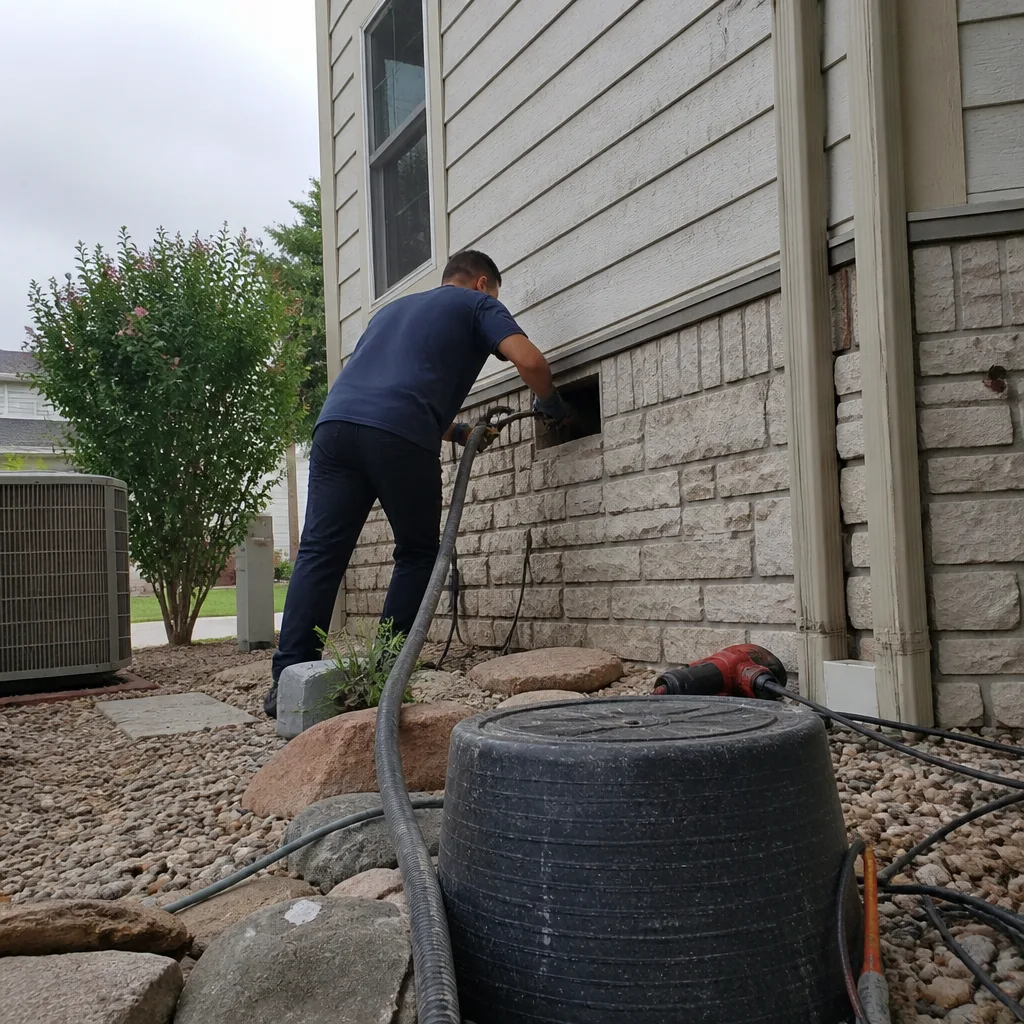 Before
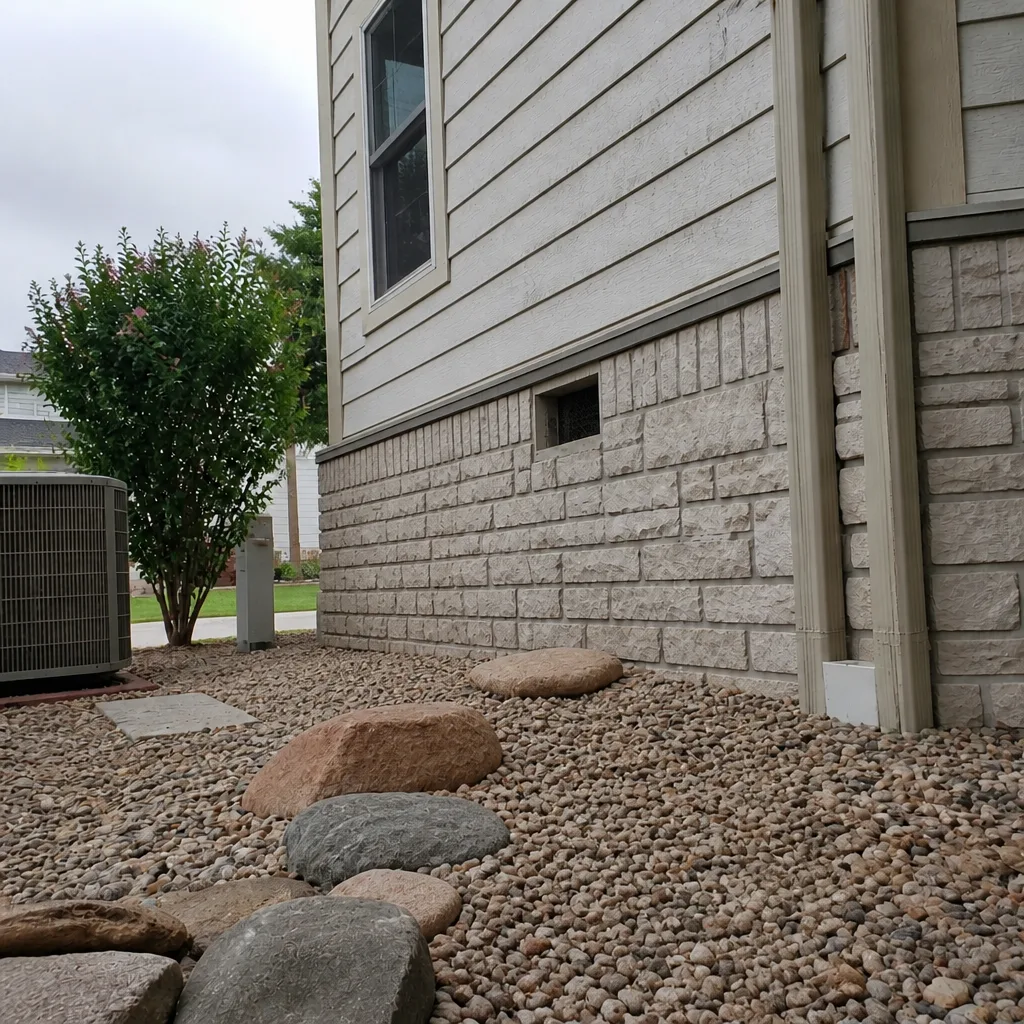 After
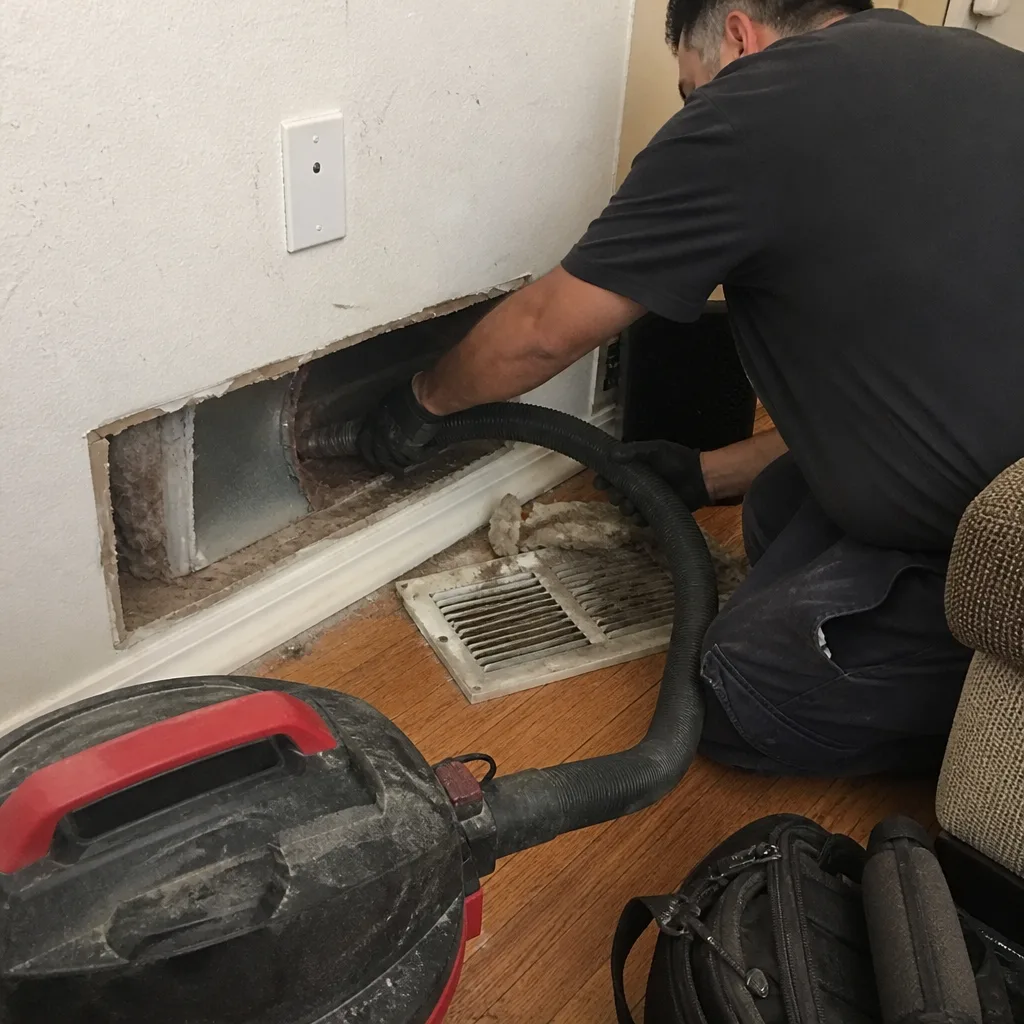 Before
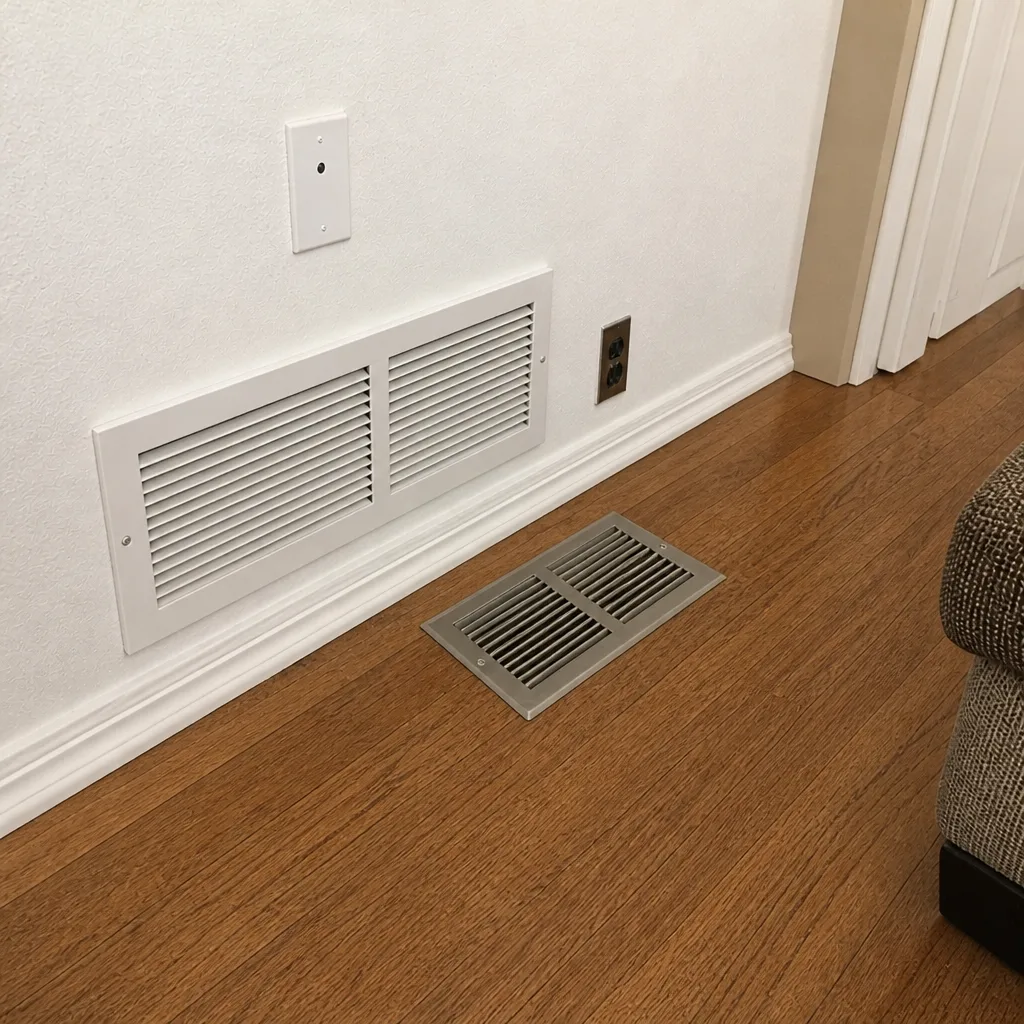 After
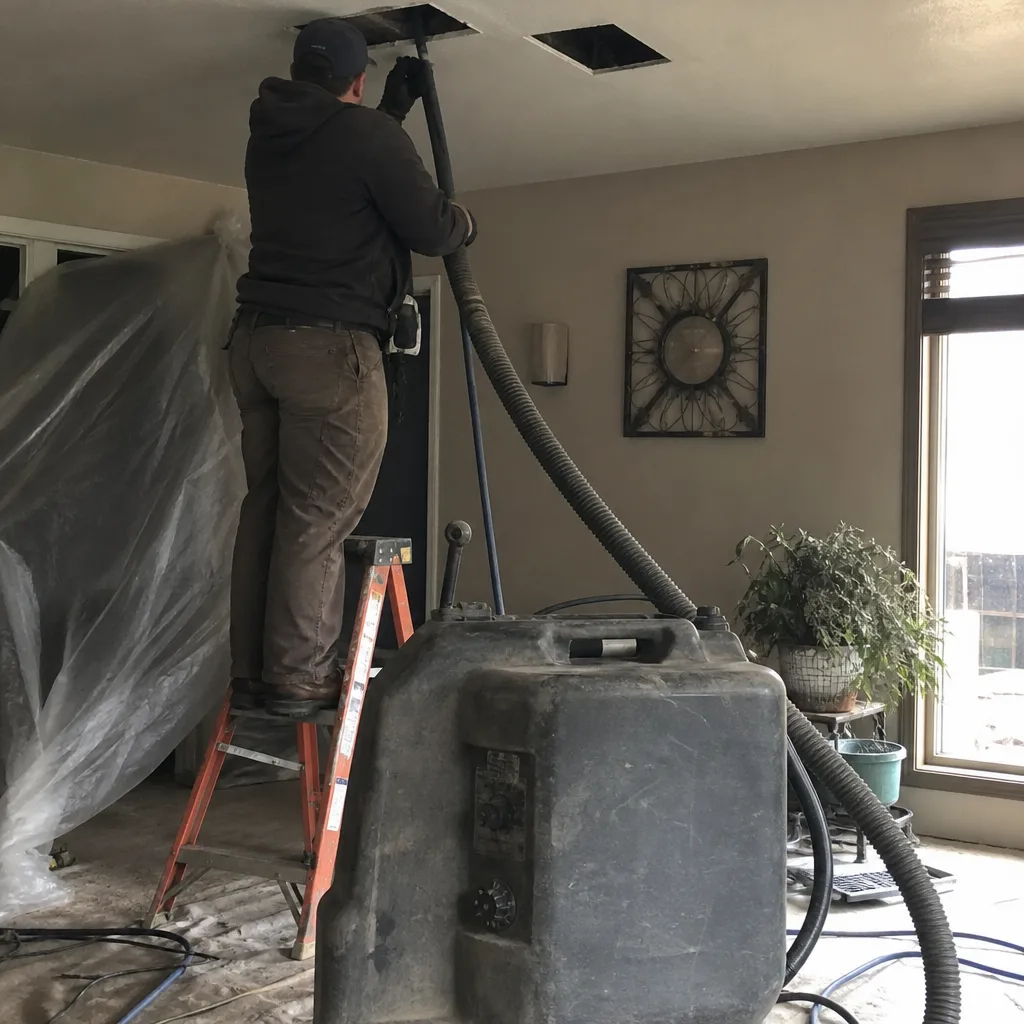 Before
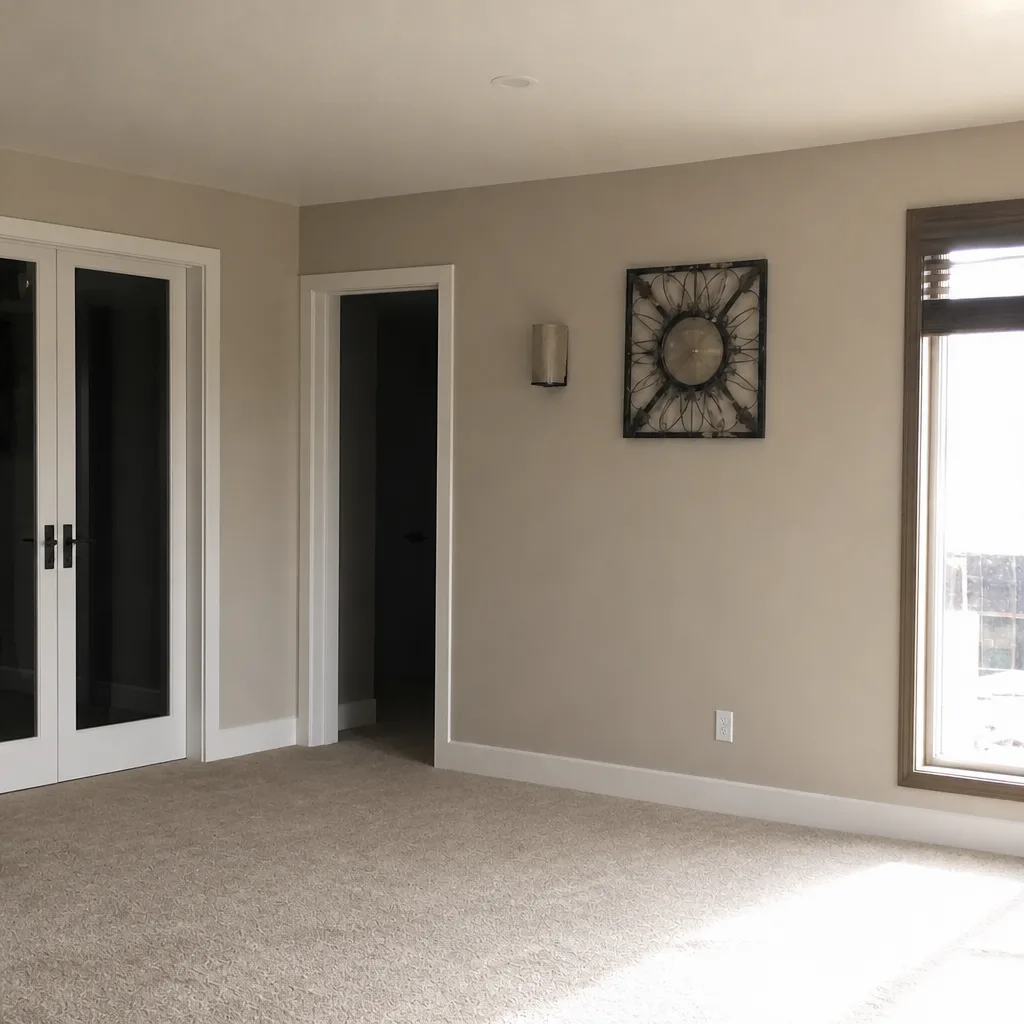 After
When to Call a Professional
Some duct conditions are worth a call rather than waiting. If a furnace or air handler has just been replaced, if the home has had a recent renovation that generated construction dust, or if the ductwork was finished as part of new construction, a cleaning and inspection is worth doing before the system carries those particles through the house. If someone in the household has developed allergies or a persistent cough tied to indoor air, that’s another sign, especially in a Highlands Ranch home that’s been through a heavy smoke season. If a dryer is taking noticeably longer to dry clothes, the vent is a safety check worth making now. Remington Air Duct Cleaning offers free estimates in Highlands Ranch – call (866) 890-5531. We answer 24/7. Fast dispatch from 7am to 7pm, Sunday through Friday.
Frequently Asked Questions
Air duct cleaning in Highlands Ranch is priced per system, not per vent, and a written estimate is provided before any work begins. We quote the whole system so you know the full number up front. That’s the whole point: one flat price per system, agreed before work starts, no per-vent pricing, no surprise additions once the technician is on site. Call (866) 890-5531 for an exact quote. Estimates are free.
Cheap quotes usually mean a shorter visit, no rotary agitation, and no negative-air containment. A truck-mounted vacuum hooked to a single register isn’t a full cleaning, and a job that doesn’t address the returns and plenum leaves the bulk of the debris in place. Ask which equipment a company brings, because the tool stack is where the price difference comes from. Call (866) 890-5531 with questions about what a quote covers.
You should get before-and-after photos of your own ducts, taken on-site, showing the same location before and after cleaning. Photos of your plenum and your heaviest-loaded returns are the proof that matters, because those are the hardest components to address and the easiest to skip. Ask for them before you pay. Call (866) 890-5531 to schedule an estimate.
Most Highlands Ranch homes don’t need annual cleaning, but the high-altitude, low-humidity climate and repeated smoke seasons push the interval shorter than the decade-or-more some guides suggest. Homes with pets, recent renovations, or allergy sufferers tend to benefit from a check sooner. A careful inspection tells you more than a fixed schedule does. Call (866) 890-5531 if you want an honest read on whether yours is due.
It can help, because fine smoke particulate that makes it past the filter tends to cling to duct walls, and cleaning removes that reservoir. It’s not a substitute for good filtration. Pairing a cleaning with a properly rated filter and, where installed, a whole-home air-quality system is the more complete answer. We work with and around systems from brands like Honeywell and Aprilaire. Call (866) 890-5531 for an estimate.
We repair as well as clean. Disconnected flex runs, crushed sections, and deteriorating plenum seams show up regularly in Highlands Ranch homes of the 1995-2010 era, and cleaning alone doesn’t fix them. A repair alongside a cleaning is usually the better use of the same visit, since the system is already open. Call (866) 890-5531 to have the ductwork inspected first.
The Bottom Line
A complete cleaning in Highlands Ranch means rotary agitation, HEPA extraction, and negative-air containment working together across every supply run, every return, and the plenum. It also means inspecting the ductwork for the flex-duct problems common in homes built from 1995 to 2010, and being ready to repair what cleaning can’t fix. The climate here loads ductwork with fine particulate faster than lower-elevation cities, so an honest inspection is worth more than a fixed schedule. Our technicians have up to 8 years of experience, and every service starts with a written scope of work and ends with before-and-after photos of your own system. If the dryer vent is due too, include it in the same visit.
Frequently Asked Questions: Highlands Ranch Duct Cleaning
Our Remington Air Duct Cleaning service covers air duct cleaning across the Highlands Ranch area. If you’d like the dryer vent done at the same visit, dryer vent cleaning can be scheduled alongside it.
- How much does air duct cleaning cost in Highlands Ranch? Priced per system with one flat price agreed before work starts. Call (866) 890-5531 for a free estimate.
- How do I know a cleaning was done properly? Before-and-after photos of your ducts, taken on-site, showing the same location. Ask for them before you pay.
- Will you clean the returns and plenum, not just the supply vents? Yes. A full job covers all three components in the same visit.
- Can you fix a disconnected or crushed flex duct? Yes. Repair is available alongside cleaning, since repair and cleaning are often best done together.
- Does dryer vent cleaning belong in the same visit? It can be scheduled at the same time, and it’s worth doing because lint buildup is a fire hazard.
- Which equipment do you use? Rotary brush systems, HEPA vacuums, and negative-air containment on every job.
Call (866) 890-5531 for a free estimate. We answer 24/7. Fast dispatch from 7am to 7pm, Sunday through Friday.
Written by the team at Remington Air Duct Cleaning.