
Last updated November 16, 2026
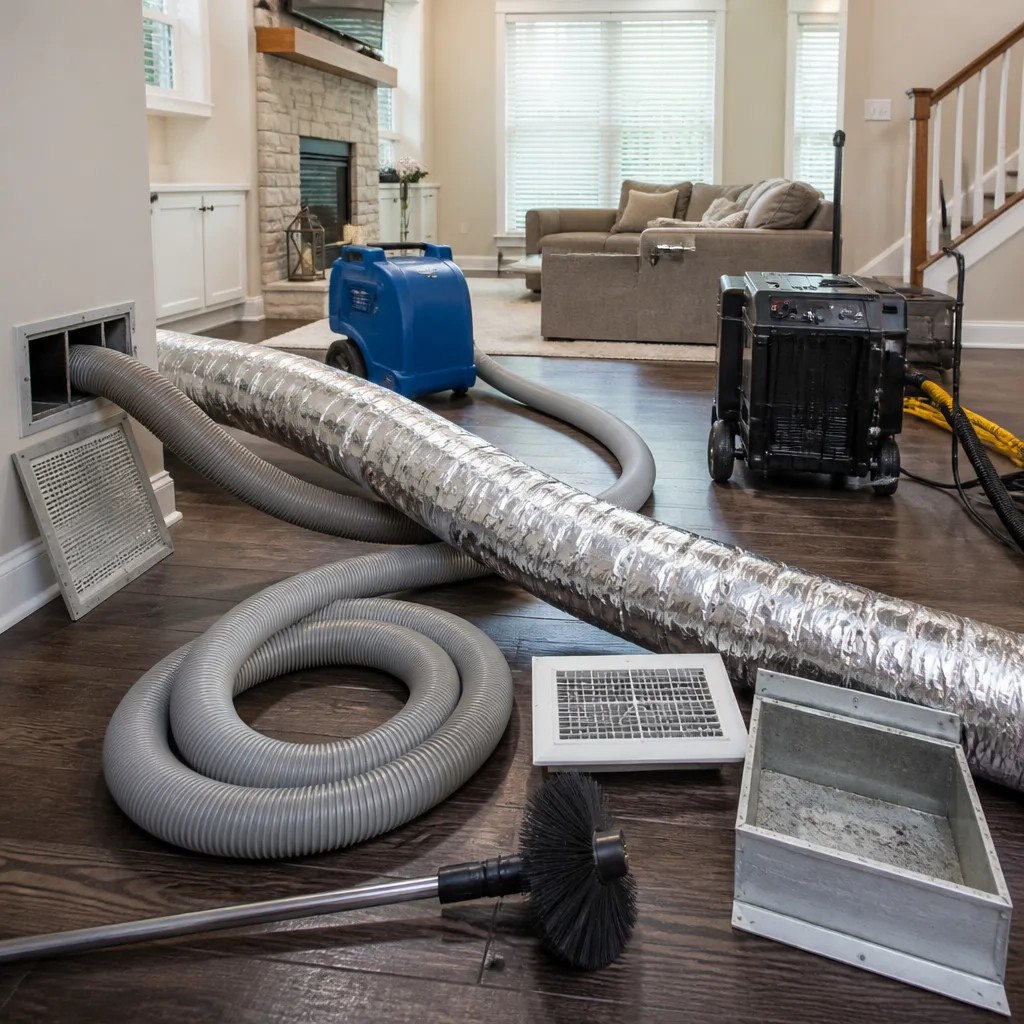 Whole-home duct cleaning
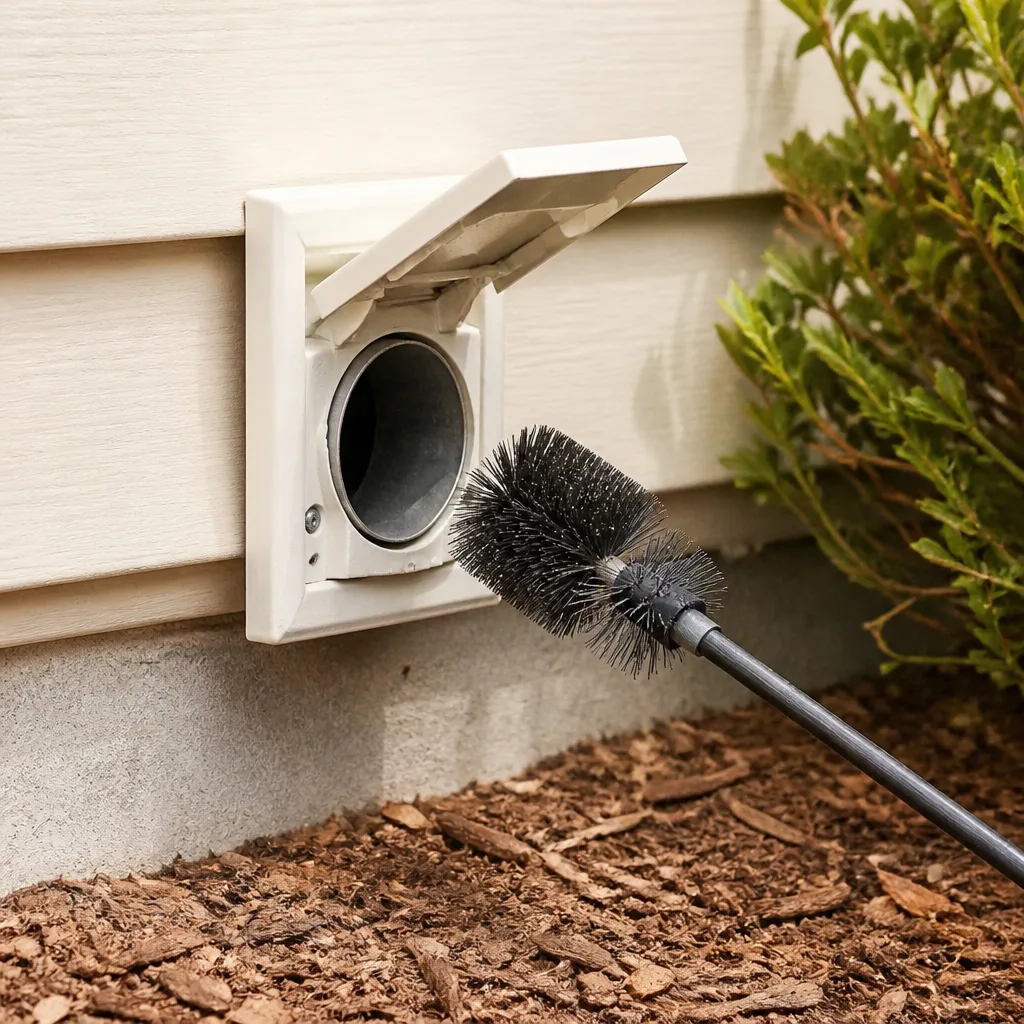 Dryer vent cleaning
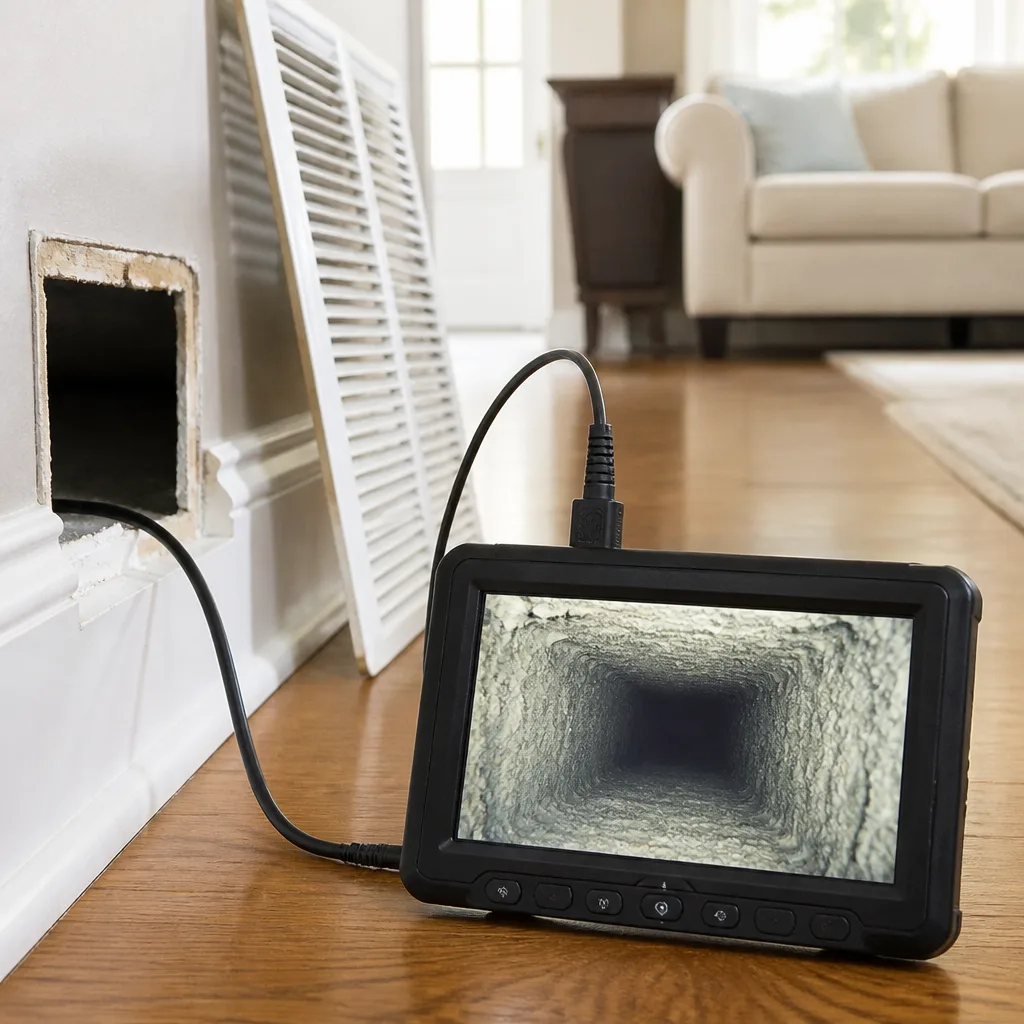 Camera inspection
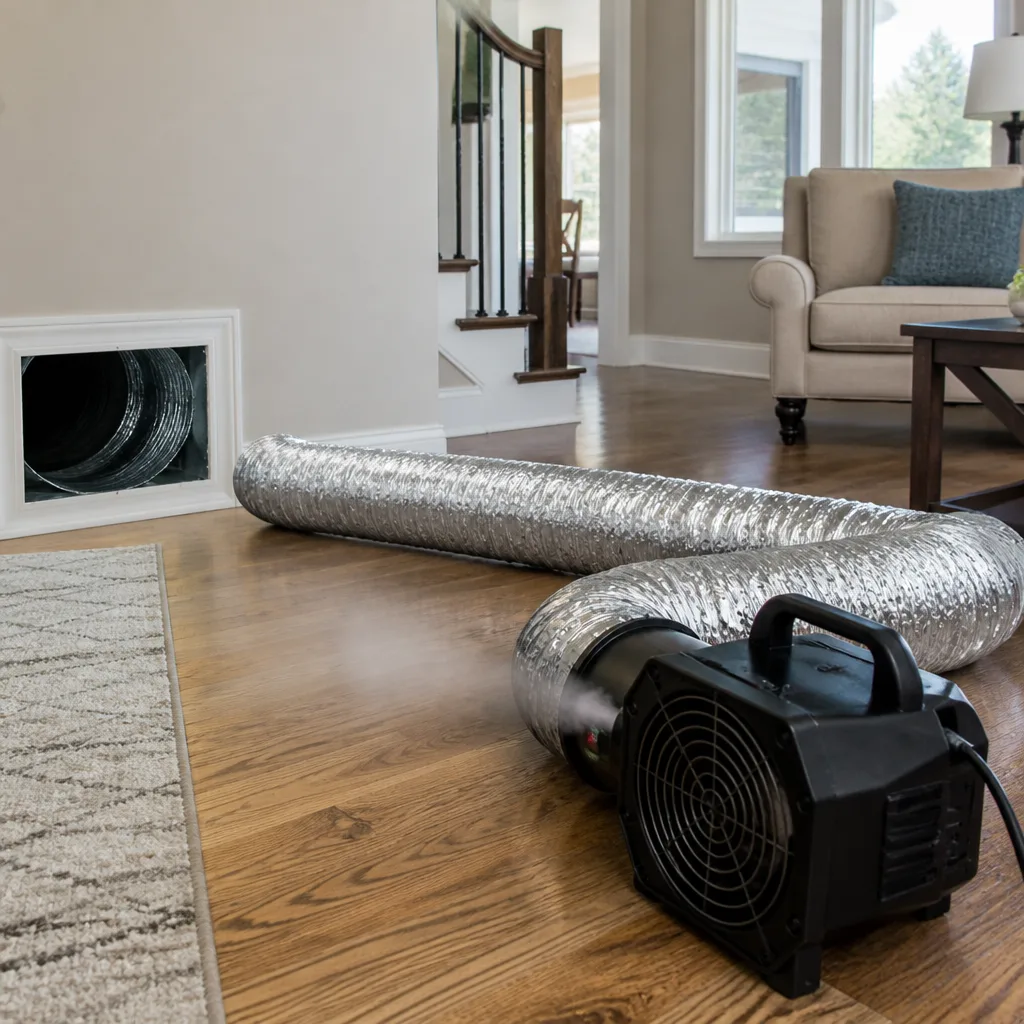 Sanitizing & deodorizing
Whole-system duct and dryer vent check with before-and-after photos - you see exactly what came out of your vents
That "$99 whole-house special" is a bait ad - the real number appears once they are in your hallway, or the "clean" is a shop-vac at the register. We photograph the inside of your ducts before and after instead.
Air Duct Cleaning Troubleshooting in Highlands Ranch: Common Problems and How to Fix Them
If closing a vent to “balance” the airflow fixed your problem, it was never an airflow problem. It was a duct problem. Most homeowners in Highlands Ranch treat weak airflow, odd smells, and rooms that never quite heat the way a thermostat problem. They adjust dampers, swap filters, and turn the fan to “on” as a workaround. Sometimes that buys comfort for a while. But here’s the thing we see over and over: the symptom you’re managing is the top layer of a problem living inside the duct system. This guide walks through each common symptom the way a technician actually diagnoses it, so you can tell what you’re dealing with and what it takes to fix it for good.
Quick Answer
Most duct problems in Highlands Ranch come down to one of five root causes: debris buildup that raises static pressure and mimics equipment failure, disconnected or crushed duct runs, moisture and biological growth, debris pulled in during wildfire smoke season or renovation, and compromised ductwork that traps airflow before it reaches a room. A camera inspection paired with a professional cleaning and containment setup resolves most of these. Symptoms alone can’t tell you which one you have; the duct system itself has to be inspected.
Styles & brands we work with
- Whole-home duct cleaning
- Dryer vent cleaning
- Camera inspection
- Sanitizing & deodorizing
Table of Contents
- Symptom Map: What Musty, Dusty, and Chemical Smells Actually Mean
- Dirty Duct vs. Disconnected Duct: Why the Distinction Matters
- Static Pressure and the Equipment Failure That Isn’t
- Highlands Ranch Factors That Accelerate Duct Problems
- Step-by-Step: How a Technician Actually Diagnoses a Duct Problem
- What You Can Monitor vs. What Requires Professional Equipment
- When Cleaning Isn’t Enough: Air Duct Repair
- Don’t Forget the Dryer Vent
Symptom Map: What Musty, Dusty, and Chemical Smells Actually Mean
A smell is evidence. It’s telling you something about the condition of the duct interior, and the type of smell narrows down the cause considerably. Most homeowners lump every odor together as “the ducts need cleaning.” But musty and dusty and chemical are three different problems with three different interventions.
Musty smell. Musty points toward moisture. In a dry climate like Highlands Ranch’s, moisture in ducts isn’t usually coming from the outdoor air; it’s coming from an internal source. Condensation on cold duct surfaces, a leak, or a long-settled humidity pocket that never fully dries can all feed biological growth inside the ductwork. Cleaning addresses the growth, but if the moisture source isn’t identified, the musty smell comes back. That’s why a musty smell should prompt an inspection, not just a cleaning.
Dusty, “old house” smell. This is the most common description we hear from Highlands Ranch homeowners. It usually points to accumulated dust, debris, and pet dander that has compacted along the duct floor and is being redistributed every time the system runs. It’s the classic sign that a cleaning is genuinely overdue, not a surface wipe-down with a shop vac. A professional cleaning with proper negative-air containment captures that debris instead of stirring it into the living space.
Chemical or “new plastic” smell. A chemical or off-gassing smell after a renovation, new paint, or new carpet install usually indicates the duct system has pulled airborne chemicals into the airstream. This isn’t something you clean with a brush and call done. It needs negative-air containment during cleaning plus an assessment of whether filtration is adequate for the load. If you have a Honeywell or Aprilaire filtration system, that’s the point to confirm it’s working as designed.
- Musty = moisture source needs identifying before cleaning.
- Dusty or stale = accumulated debris, cleaning overdue.
- Chemical or off-gassing = renovation contamination, containment critical.
- Burning or hot-wire smell = stop the system and call a licensed HVAC technician immediately.
One more note: if the smell only appears when the heat first kicks on in fall, that’s often dust burning off the heat exchanger rather than a duct problem. Worth confirming before you assume the ducts are the culprit.
Dirty Duct vs. Disconnected Duct: Why the Distinction Matters
Here’s the single most useful distinction in duct troubleshooting: a duct filled with dust is one thing. A duct that’s come apart somewhere between the air handler and the register is another, and no amount of cleaning will fix it. The symptoms can look similar on the surface. A room that gets weak airflow could be fed by a clogged duct or by a duct that’s completely separated at a joint. The only reliable way to tell is to inspect the duct interior with a camera.
In Highlands Ranch, the conditions that lead to disconnected ductwork are common. Soil movement in the expansive Front Range clay can shift the foundation and slab slightly over time, and rigid duct sections flexed by that movement can pop a joint or crush a flexible run. Ductwork in unconditioned attic space also expands and contracts through the wide temperature swing between a Highlands Ranch summer afternoon and a winter night, and that cycling loosens connections. Crushed flex duct in a tight attic run is another classic; the airflow gets pinched off even though the duct is technically still connected.
The practical difference between the two:
- Dirty duct: Restricted airflow from debris accumulation. Cleaning resolves it.
- Disconnected duct: Air escapes into a wall cavity, attic, or crawlspace before it reaches the register. Cleaning alone does nothing; the duct has to be reconnected and sealed.
- Crushed duct: Airflow pinched by a run that’s collapsed or crushed. Requires repair or replacement of the affected section.
- Leaky duct: Doesn’t need full disconnection; small leaks still bleed conditioning and pull contaminated air in from unconditioned space.
This is where cleaning and repair are two different services. air duct cleaning is the right answer for the first problem and useless for the others. That’s why a system that gets cleaned without an inspection will sometimes still feel broken afterward. We don’t just clean; we inspect and repair.
Static Pressure and the Equipment Failure That Isn’t
One of the most expensive misdiagnoses in home HVAC happens when a homeowner is told their blower or furnace is “going out” because it’s running hard, tripping on high limit, or not delivering the airflow it used to. In a lot of those cases, the equipment is fine. The duct system is the problem. Here’s the mechanism.
Your HVAC system is designed to move a specific volume of air through the ducts. That airflow gets harder to push when the path is narrowed; the fan has to move faster and work harder to satisfy the thermostat. That resistance is called static pressure. Debris accumulation along the duct floors, a filter that’s overloaded because the ducts are pulling in more dust, or a crushed run all raise static pressure. The equipment reads it as increased load, and the symptom shows up as what looks like failure: short cycling, poor cooling, a blower that sounds like it’s struggling, high limit trips in winter.
Homeowners understandably replace equipment to solve this. We’ve seen the same return-call pattern enough times to know the airflow symptom often survives the new equipment because the ducts were the story the whole time.
What actually confirms the source is a static pressure measurement combined with a camera and visual inspection of the duct interior. If the static pressure is elevated and the ducts show a clear obstruction or a crushed section, cleaning and repair will resolve the symptom. If the pressure reading is normal and the duct interior looks clear, the equipment itself is the right thing to look at. That test is what separates a real diagnosis from replacing parts and hoping.
What raises static pressure inside a duct system
- Debris compacted along the duct floor reducing open cross-section.
- Crushed or pinched flexible duct runs in tight attic or crawl spaces.
- Disconnected duct sections allowing air to escape into unconditioned space.
- Overloaded filters caused by higher debris load than usual.
- Undersized or poorly designed returns that were already marginal, now further restricted.
If your system is short-cycling or your blower is running harder than usual, get the ducts inspected before you authorize a blower replacement. A camera view into the ducts is fast, non-invasive, and it’ll tell you which side of the problem you’re actually on.
Highlands Ranch Factors That Accelerate Duct Problems
Not every neighborhood has the same duct problems on the same schedule. Highlands Ranch has a few specific things that push ductwork harder than you might expect for a suburban community that’s only a few decades old. Knowing them helps you anticipate what’s likely happening in your own home.
Clay soil and ground movement. The expansive clay soil common across the Front Range swells and shrinks with moisture cycles, and that movement reaches the slab and foundation. Ductwork buried in slab or run through connected framing takes that movement on the chin over time. Joints loosen, seams separate, and a duct that was properly sealed at install can develop leaks or complete disconnections as the structure moves underneath it.
Dry climate. Low humidity in Highlands Ranch means static electricity builds up on dust particles moving through the air. That causes fine dust to cling to duct walls instead of passing through the filter. Over time, this builds a compacted layer along the duct floor that a consumer-grade vacuum can’t touch. Dry air also makes the seams in flexible duct crack more readily than they would in a humid climate.
Wildfire smoke seasons. Summer and early fall smoke events push fine particulate into homes even with windows closed. Return ducts and filters capture a lot of it, and whatever makes it onto the interior surfaces of the supply ducts stays there. If a Honeywell or Aprilaire media filter is in place, it captures much of the load, but that same filter needs replacing on a shorter cycle during those seasons, and the ducts behind it still need periodic professional cleaning. Captured, not recirculated, is the standard to hold to.
New construction and renovation dust. Highlands Ranch has a steady stream of renovations, additions, and new builds. Drywall dust, sawdust, and construction particulates pull straight into the return air path during work. If your home just had work done and the system ran without a sealed return, you’re a good candidate for a post-renovation cleaning before that material settles into the duct walls permanently.
Attic heat cycling. Attic ductwork in Highlands Ranch sees big swings between a hot summer afternoon and a cool night. The flex runs expand and contract, joints loosen, and seams crack. A home that’s 15 to 20 years old on original ductwork in unconditioned attic space is a common profile for leaks and disconnections, regardless of how well the rest of the house is maintained.
Step-by-Step: How a Technician Actually Diagnoses a Duct Problem
A real diagnosis is methodical. It moves from the simplest, cheapest questions to the most invasive, and it verifies each step before moving on. Here’s the actual sequence a technician works through on a Highlands Ranch home, from the moment we arrive to the point where we can say with confidence what’s wrong and what it costs to fix.
- Walk the home and take the symptom history. Which rooms feel weak? When did it start? Is the smell present all the time or only when the system first comes on? What changed recently (renovation, filter change, HVAC service)? That conversation narrows the target before we ever open a panel.
- Inspect the air handler and filter. A loaded filter raises static pressure just like debris does. A filter that’s been running for months in a Highlands Ranch wildfire smoke season can be almost completely saturated and still look intact. We check it, replace it, and note the MERV rating and vent size so the homeowner knows what to buy going forward.
- Measure static pressure at the air handler. This gives a baseline for how hard the system is working to move air and confirms whether the symptom points to the duct system or the equipment.
- Camera inspection of the main trunk and suspect runs. We push a camera into the main trunk and any runs connected to the weak rooms. This is where the truth lives: debris depth, mold, moisture, crushed sections, disconnected joints, and the general condition of the duct wall. A camera view resolves the dirty-vs-disconnected question definitively.
- Map the airflow. Reading the actual airflow at each register confirms which rooms are starved by the duct system and which are just under-supplied by design.
- Recommend the right service, not a package. Sometimes it’s a cleaning. Sometimes it’s a repair. Sometimes the ducts are fine and the equipment’s the issue. A diagnosis without an upsell attached to it is the whole point of the sequence.
The tools that matter at the inspection phase are the camera and the static pressure gauge. The tools that matter at the cleaning phase are the professional-grade equipment: a Rotobrush rotary brush system to agitate and dislodge debris on the duct walls, a Nikro HEPA vacuum to pull the loosened material out, and Abatement Technologies negative-air equipment to keep the working space under negative pressure so what’s dislodged is captured, not blown into the living room. Surface-level cleaning misses what’s compacted along the duct floor. Professional equipment reaches it.
What You Can Monitor vs. What Requires Professional Equipment
It’s worth being honest about which part of this a homeowner can genuinely own and which part needs professional equipment. Monitoring is the homeowner’s job. Fixing is ours.
What you can monitor:
- Filter condition. Check it every three months and sooner during wildfire smoke season or after a renovation. A saturated filter is the most common single cause of airflow complaints we see.
- Register airflow. A hand or a tissue at each vent will tell you if airflow is being delivered at all; comparing registers room to room reveals the pattern.
- Visual dust at the registers. A quick look with a flashlight at the grille gives you a general sense of the system’s cleanliness. Heavy dust at the grille almost always means dust inside the ducts.
- Smell and humidity. Musty smells and condensation on duct surfaces are red flags worth writing down and calling about.
- Notice patterns. Rooms that just started feeling weak, a smell that just started, or a new noise after a contractor visited are all information a technician needs.
What requires professional equipment:
- Resolving compacted debris. Rotary brush systems (Rotobrush) agitate debris off the duct wall; consumer vacuums only lift what’s loose.
- Containing the debris during cleaning with negative-air equipment (Abatement Technologies) so it’s captured and not recirculated through the home.
- Camera-verifying what was done. Before-and-after photos of your own ducts are the honest confirmation that work happened.
- Repairing a disconnection or crushed run. This means physically accessing the duct, reconnecting or replacing it, and re-sealing the joint so it stays sealed under normal system pressure.
- Testing static pressure. A static pressure reading requires a manometer and the training to interpret it.
- Coordinating with your filtration system. If you have a Honeywell or Aprilaire filter, whether it’s working as designed and the ducts are supporting it is a professional call.
The line between the two lists is not about willingness to work. It’s about the tools and the expertise to do the work without creating a bigger problem. Consumer-grade cleaning equipment can dislodge debris without capturing it, which makes things worse. That’s why the professional stack matters.
When Cleaning Isn’t Enough: Air Duct Repair
If you’ve read this far and you’re recognizing your own symptoms, the next question is a fair one: will a cleaning fix this, or do I need something more? Here’s the honest answer: cleaning fixes debris problems. Repair fixes structural problems. Some ducts need both, and it’s cheaper to know upfront than to schedule a cleaning that doesn’t resolve the symptom.
The signs that you likely need repair, not just cleaning:
- One room consistently weaker than every other room regardless of the season. That pattern almost always means the duct feeding that room is damaged or disconnected.
- Overheating or short cycling that started suddenly and doesn’t resolve with a filter change. Elevated static pressure from a crushed or disconnected run is the common culprit.
- Visible damage to flexible duct in the attic. Crushed or torn runs are common in tight attic spaces.
- Pest activity in the ducts. Duct repair and sealing addresses the entry point; cleaning alone treats the symptom.
- Musty smells that come back after a cleaning. The moisture source and the compromised duct surface both need addressing, not just the cleaning.
Air duct repair is where a lot of duct-cleaning companies stop, because their truck isn’t set up for it. Repair requires accessing the duct, cutting out the damaged section, reconnecting the run so the join is sound, and re-sealing the seams. On a Highlands Ranch home with attic ductwork and shifting clay soil, repair is often the right answer long before a cleaning will do anything. If you’ve had a cleaning and the problem persisted, the cleaning wasn’t the right service.
Don’t Forget the Dryer Vent
Every duct system has a second vent in the house that most people never think about, and it’s the one with the biggest safety stake. Your dryer vent is a duct. It moves air, it collects lint, and when it clogs, it’s a documented leading cause of residential fires. It doesn’t get the same attention as the HVAC ducts because it’s out of sight and behind the dryer, but a clogged dryer vent is the most consequential single duct problem in a home.
Signs the dryer vent needs attention:
- Clothes take two cycles or more to dry.
- The dryer or the wall behind it feels unusually hot.
- There’s a burning smell when the dryer is running.
- Lint is visible where the vent exits the wall, or the vent flap doesn’t open fully.
Cleaning the dryer vent is a different process from cleaning the HVAC ducts. It uses different tools, it addresses a different risk, and most duct-cleaning services treat it as an afterthought or decline it altogether. dryer vent cleaning is a dedicated service for exactly this reason. If your HVAC ducts are getting a professional cleaning, it’s worth scheduling the dryer vent at the same time. Both are about airflow and both are about what builds up when airflow is restricted.
Common Mistakes to Avoid
We see the same handful of missteps from Highlands Ranch homeowners over and over, and most of them are avoidable. Here’s what to watch for:
- Closing vents to “balance” airflow. Closing a register doesn’t balance anything. It raises static pressure in the rest of the duct system, pushes more load onto the blower, and often makes the original symptom worse. If closing a vent fixed it, that’s a duct symptom, not a design feature.
- Running a consumer shop vac or blower into the ducts. Consumer equipment can’t pull compacted debris off the duct wall, and without negative-air containment it can blow dislodged debris straight into the living space. That’s the opposite of a cleaning.
- Assuming a filter change fixes weak airflow. It helps when the filter is the problem. It doesn’t help when the problem is inside the duct. Rule out the filter first, then look at the ducts.
- Ignoring wildfire smoke season filter changes. A filter that’s usually fine for three months can be saturated in a few weeks during a Highlands Ranch smoke event. Check it more often during those months.
- Replacing HVAC equipment before inspecting the ducts. Elevated static pressure from debris or a crushed duct mimics equipment failure. Get the camera and static pressure reading first. Replacing the equipment can leave the original symptom in place when the ducts were the real story.
- Accepting a cleaning without containment setup. If the equipment on site doesn’t include negative-air containment (Abatement Technologies is what we use), the dislodged debris isn’t being captured. Ask how the contained space is being managed before work starts.
- Doing the dryer vent last, or not at all. The dryer vent is the highest-risk duct in the house. It deserves the same professional attention as the HVAC ducts.
See the difference
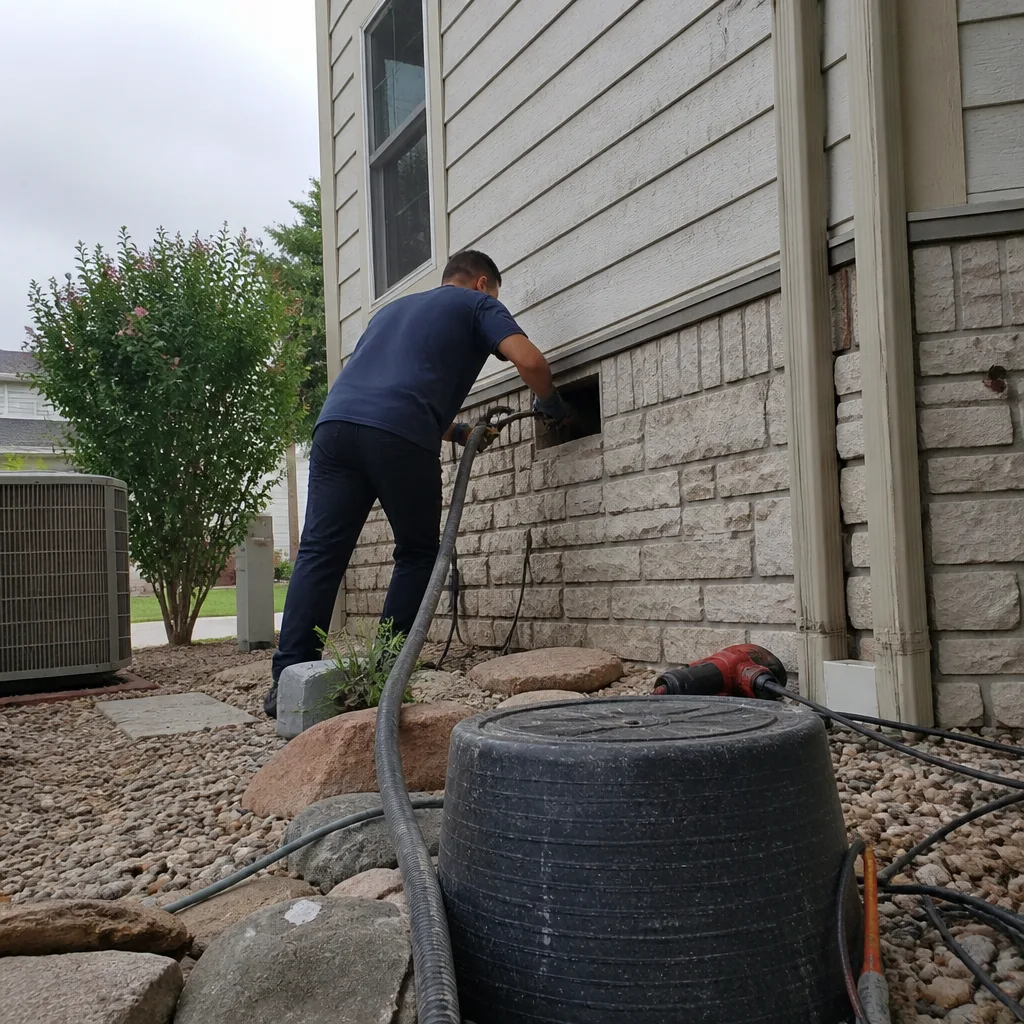 Before
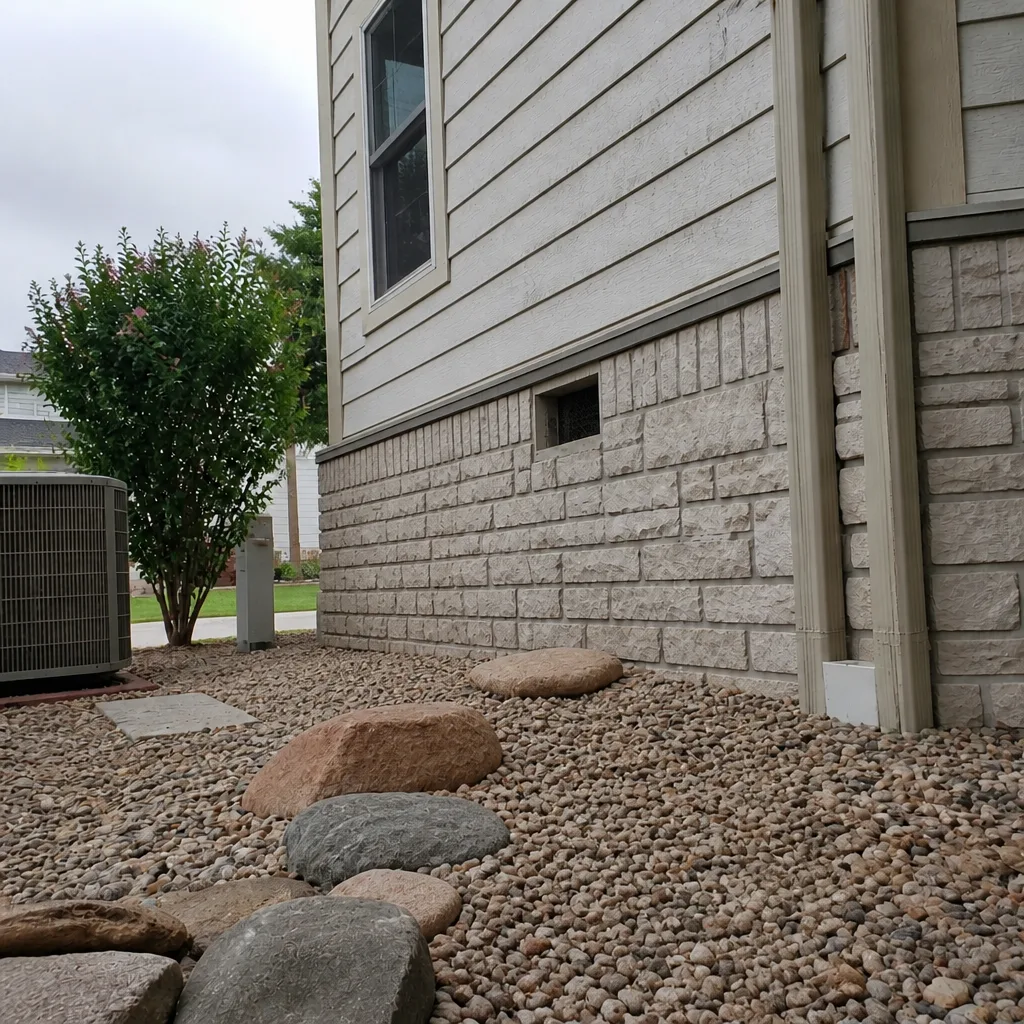 After
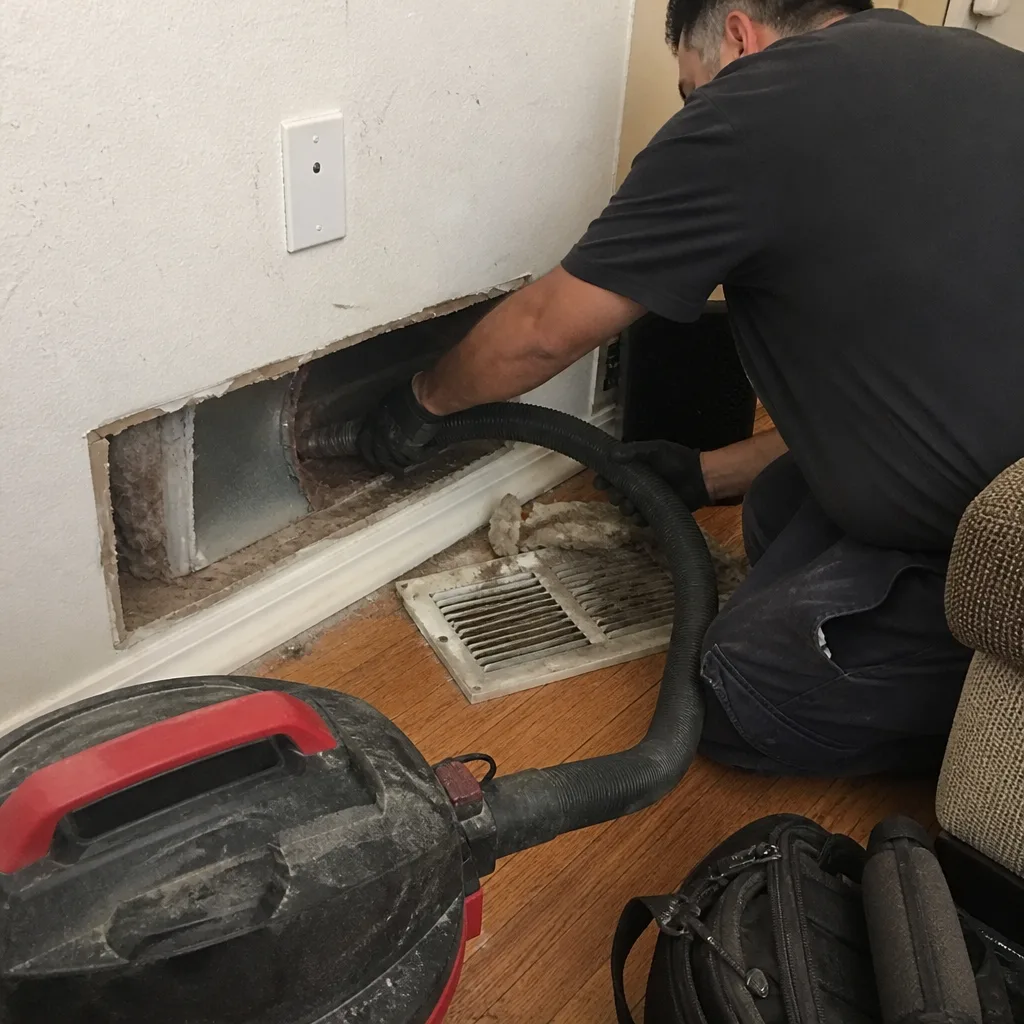 Before
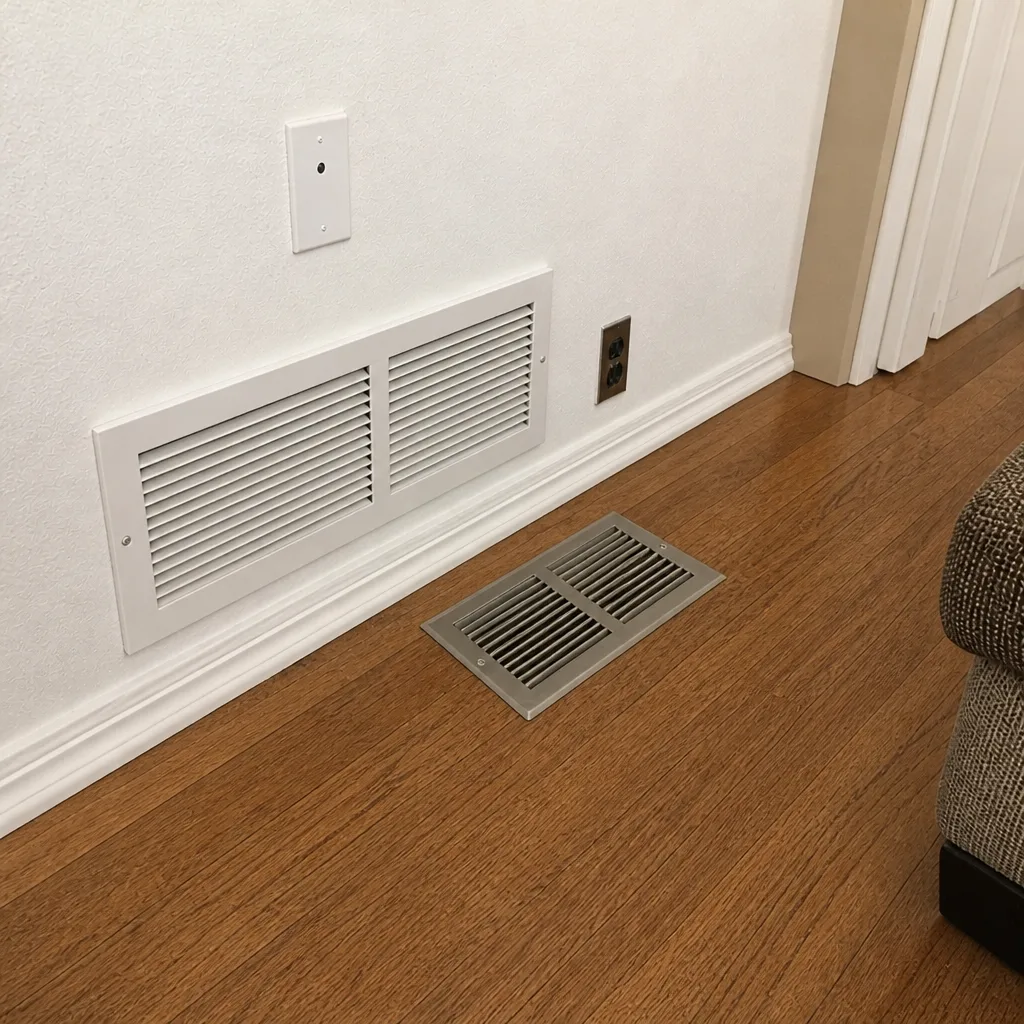 After
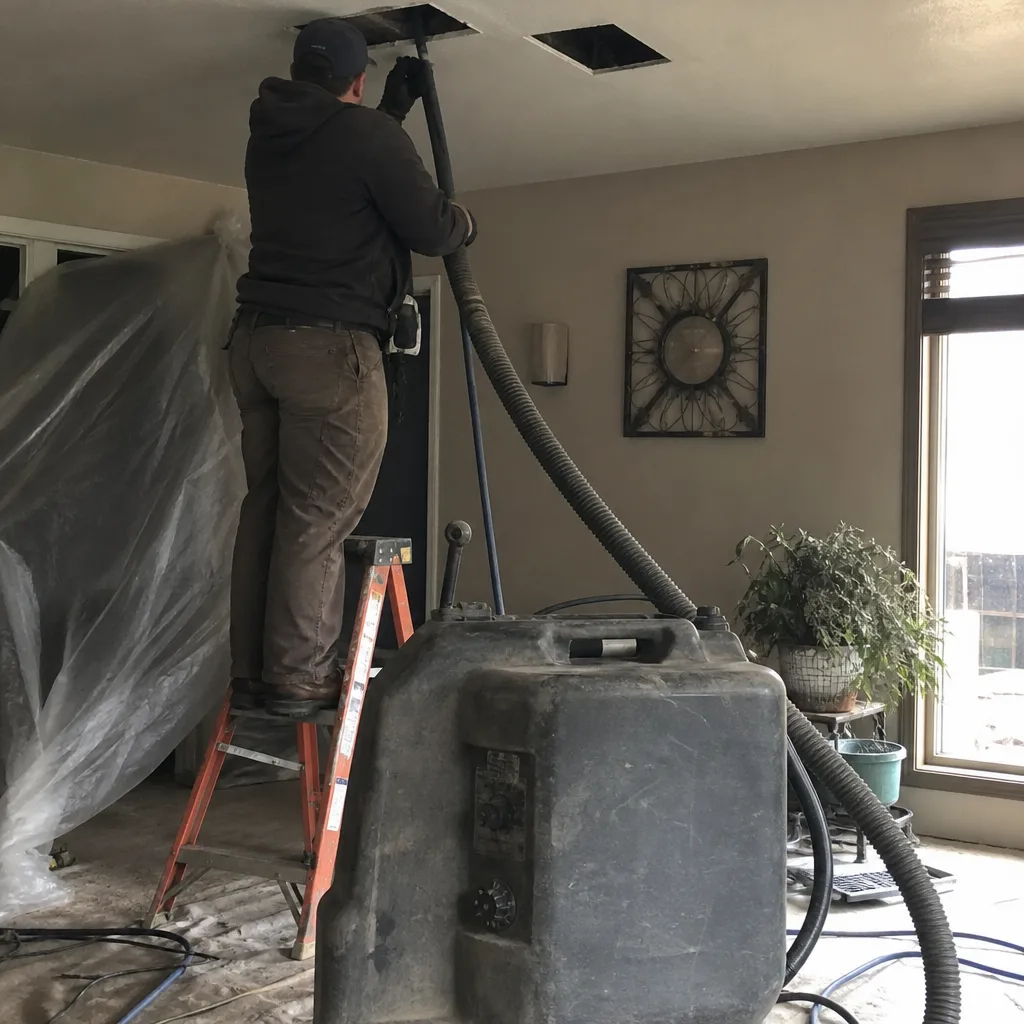 Before
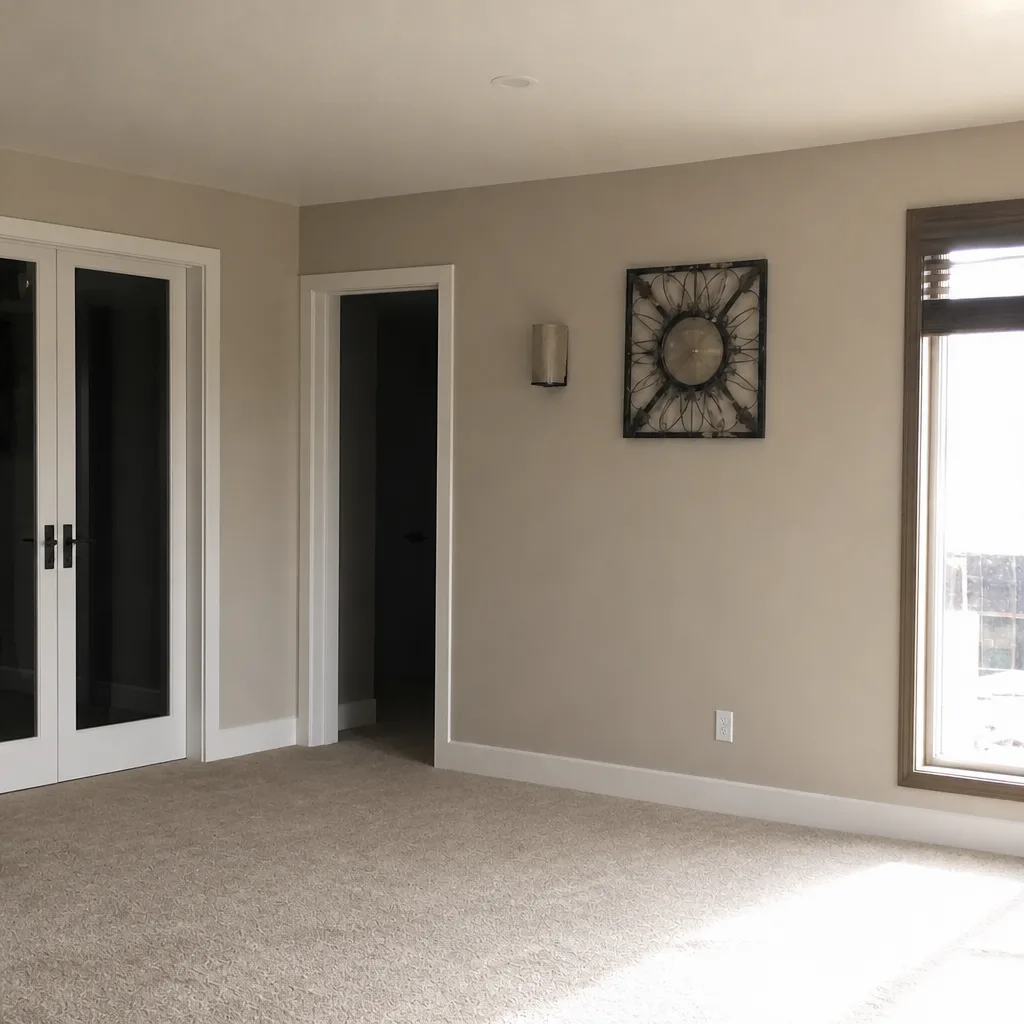 After
When to Call a Professional
Some signs are clear enough that waiting only makes the problem bigger. Call a professional if any of the following is true:
- One room or zone in your home consistently feels weaker than the rest, and closing vents hasn’t fixed it.
- Your system short cycles or feels like it’s running harder than it used to and a filter change didn’t help.
- A musty smell keeps coming back, or a smell appears only after a renovation or new install.
- You can see dust blowing out of the register when the system comes on.
- Your dryer takes two cycles to dry clothes, or the wall behind it feels hot.
- You live in a Highlands Ranch home with original attic ductwork and have never had the system inspected.
Remington Air Duct Cleaning offers free estimates in Highlands Ranch. Call (866) 890-5531 to schedule a diagnostic inspection. We don’t bring a shop vac and call it a cleaning. We bring a camera, static pressure gauges, and a professional equipment stack that includes Rotobrush, Nikro, and Abatement Technologies, and we tell you honestly whether you’re looking at a cleaning, a repair, or whether your ducts are fine and the equipment needs the attention. Whatever the diagnosis, the price is set by the written estimate before work starts, and you get before-and-after photos of your own ducts to confirm the work was done.
Frequently Asked Questions
A musty smell in the summer in Highlands Ranch usually points to a moisture source inside the duct system, not just accumulated dust. The dry climate makes it less likely to be general humidity and more likely to be condensation on cold duct surfaces, a small leak, or a humidity pocket that never fully dries. Musty smells should get an inspection, not just a cleaning, because cleaning removes the growth but the smell returns if the moisture source isn’t found. Call (866) 890-5531 for an exact quote; estimates are free.
The two look similar at the vent but need completely different fixes, and the only reliable way to tell them apart is with a camera inspection of the duct interior. A dirty duct has visible debris accumulation along the walls and floor with a continuous duct path. A disconnected duct has a break in the run that lets air escape before it reaches the register. Cleaning fixes the first; repair fixes the second. If you’ve had a cleaning and the symptom returned, ask for a camera inspection before scheduling another cleaning.
Yes, and it’s one of the most common misdiagnoses we run into. Debris buildup and crushed duct runs both raise static pressure, which makes the blower work harder to move the required airflow. That shows up as short cycling, high limit trips, and weak comfort in a way that reads like equipment failure. A static pressure measurement plus a camera view of the ducts confirms whether the equipment or the ducts are the actual source. Get the diagnosis first before you authorize a replacement.
The expansive Front Range clay soil shifts with moisture cycles and that movement reaches the ductwork, loosening joints and separating seams over time. The dry climate also makes fine dust cling to duct walls instead of passing through, and wildfire smoke seasons push a heavy particulate load into the system. Between the three, Highlands Ranch duct systems see more stress than you’d expect for a suburban community of this age. Proactive inspection is a reasonable choice for any home past the 10 to 15 year mark.
For most homes, a professional cleaning at the point where a camera inspection shows significant accumulation is more useful than a fixed calendar cycle. Homes with pets, allergy sufferers, or anyone who’s been through a major renovation or a heavy wildfire smoke season should schedule sooner. Homes with recent construction dust in the system should schedule as soon as the work is done. The honest answer: the camera tells you, not the calendar. Call (866) 890-5531 and we’ll inspect first, quote after.
Yes, in three ways that matter. Rotary brush systems like Rotobrush agitate compacted debris off the duct wall where consumer vacuums only lift what’s loose. Nikro HEPA vacuum units pull the loosened material out at commercial-grade suction. Abatement Technologies negative-air equipment keeps the work space under negative pressure so dislodged debris is captured, not redistributed into your living space. All three together is what separates a real cleaning from a surface pass. Ask what equipment is on site before work starts.
The Bottom Line
The symptoms that bring Highlands Ranch homeowners to a duct troubleshooting search are almost always top-layer: weak airflow, a smell, uneven temperatures. The root cause lives one layer deeper, and the only way to know whether you’re facing debris buildup, a disconnected run, a crushed duct, a moisture problem, or a filtration issue is to inspect the system with the right tools. Cleaning fixes what’s inside the ducts. Repair fixes the ducts themselves. Airflow monitoring and filter changes are yours to own; compaction, containment, static pressure, and camera verification are the professional’s job. Whether you’re on the Front Range clay or a newer Highlands Ranch build, the pattern holds: an inspection tells you what to do next, and the written estimate tells you what it costs before work starts. Remington Air Duct Cleaning handles the whole job when you need it: cleaning, repair, and dryer vent. Reach out to our team in Highlands Ranch to schedule a free estimate, and call (866) 890-5531 when you’re ready.
We answer 24/7. Fast dispatch from 7am to 7pm, Sunday through Friday. Estimates are free, and our technicians have up to 8 years of experience with professional-grade equipment on every job. Licensed and insured, one flat price per system agreed before work starts, and before-and-after photos of your own ducts to confirm the work was done.
Written by the team at Remington Air Duct Cleaning.