
Last updated November 16, 2026
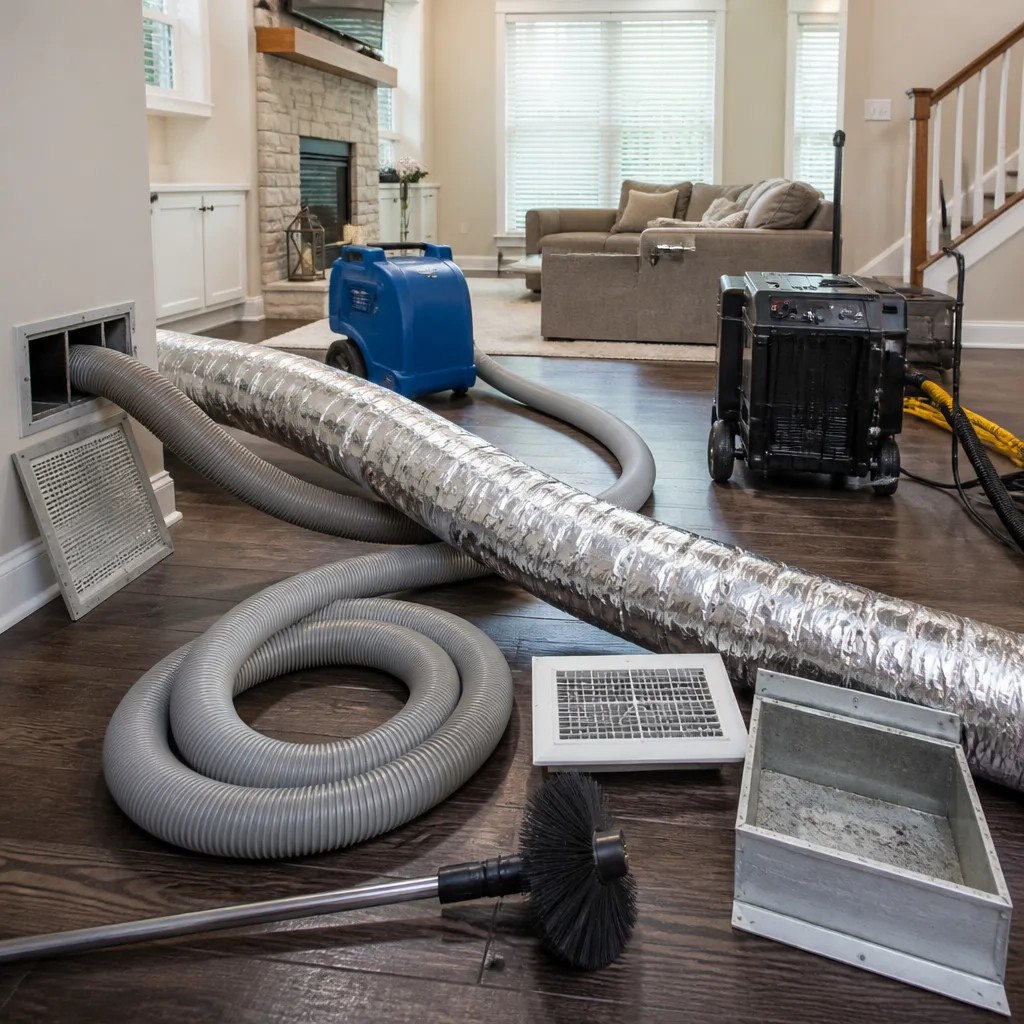 Whole-home duct cleaning
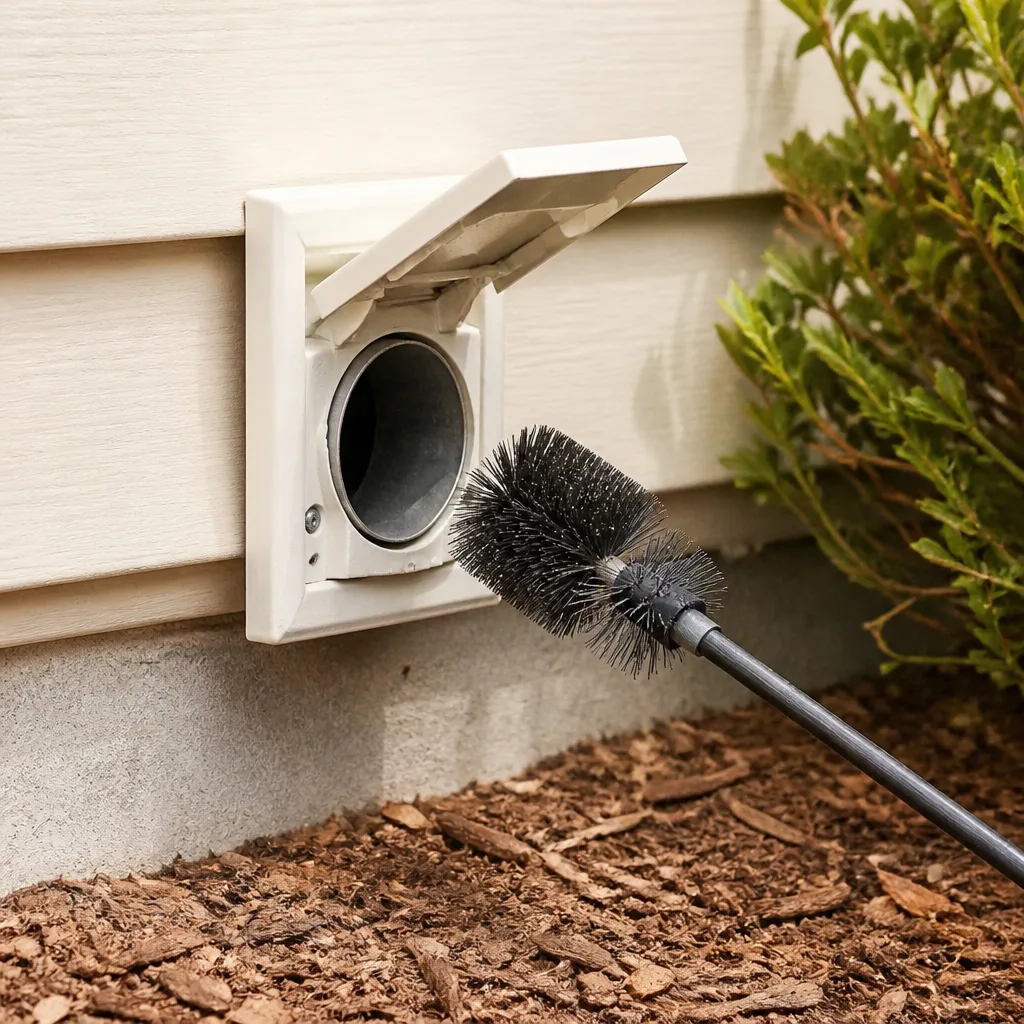 Dryer vent cleaning
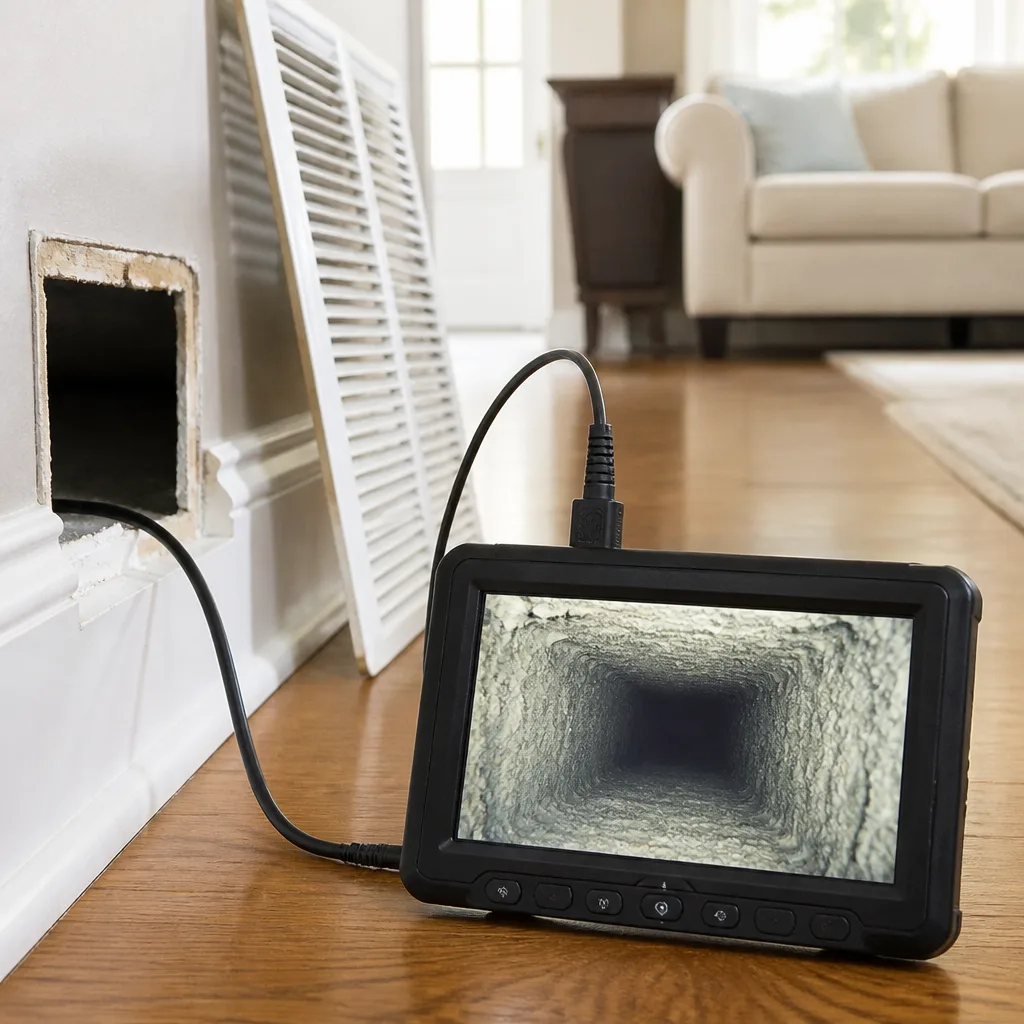 Camera inspection
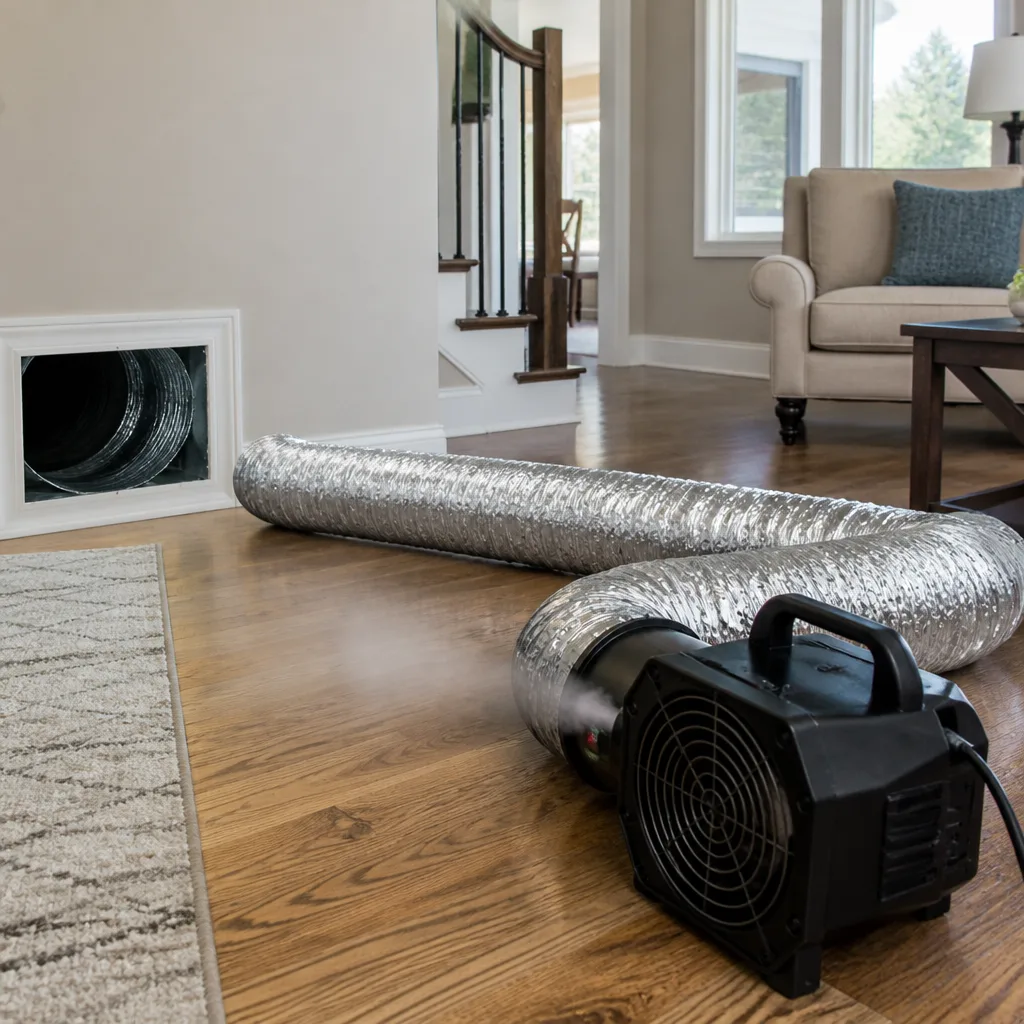 Sanitizing & deodorizing
Whole-system duct and dryer vent check with before-and-after photos - you see exactly what came out of your vents
That "$99 whole-house special" is a bait ad - the real number appears once they are in your hallway, or the "clean" is a shop-vac at the register. We photograph the inside of your ducts before and after instead.
Seasonal Air Duct Cleaning Care for Highlands Ranch: Year-Round Homeowner’s Guide
Most duct cleaning advice tells you to schedule the work every three to five years and leaves it at that. That single number ignores the way a house in Highlands Ranch actually lives through a Colorado year. One bad wildfire smoke week pushes finer, oilier particulate into a return system than two ordinary years of dust ever would. Heating season leaves its own residue behind. Winter static changes how dust clings to the inside of a duct. This guide breaks the year into the four stress periods that hit Highlands Ranch homes hardest and shows what each one means for your ducts, your filters and your indoor air.
Quick Answer
Air duct cleaning in Highlands Ranch works best on a seasonal rhythm, not a fixed calendar count. Inspect and clean after heating season in spring to clear combustion byproducts and humidifier scale, protect the return side against summer wildfire smoke, check the furnace and duct runs before the first cold snap in fall, and watch static and dust adhesion through the dry winter. A rolling 12-month log of what you see and smell tells you when your own conditions call for professional cleaning sooner than a baseline schedule would.
Styles & brands we work with
- Whole-home duct cleaning
- Dryer vent cleaning
- Camera inspection
- Sanitizing & deodorizing
Table of Contents
- Why Highlands Ranch Seasons Hit Ducts Differently
- Spring: The Most Important Inspection Window of the Year
- Summer: Wildfire Smoke Is Not Household Dust
- Fall: The Pre-Heating-Season Checklist
- Winter: Dry Air, Static and Dust Adhesion
- Building Your Rolling 12-Month Duct Log
- What Professional Equipment Does That a Shop Vac Can’t
- Dryer Vent Cleaning Belongs on the Same Schedule
Why Highlands Ranch Seasons Hit Ducts Differently
Highlands Ranch sits at elevation south of Denver, on the high plains where the air is dry much of the year and the wind rarely stops. Heating dominates the cold months. Cooling runs through the summer. Between the two, spring pollen and summer smoke ride in on the same return air your system pulls back through the house. Those are four different kinds of load on one duct system, and each one behaves differently once it’s inside.
A one-size schedule misses the difference. Some debris is heavy and settles on the bottom of a duct. Some is fine enough to stay airborne and coat the walls. Some is oily and sticks. In our experience the homeowners who get the most out of a scheduled cleaning are the ones who know which of these they’re dealing with and time the work accordingly.
Here’s the split that matters for a Highlands Ranch home:
- Spring: what heating season left behind, from combustion byproducts to humidifier scale to sediment that slipped past the filter.
- Summer: fine smoke particulate from wildfire season, which standard filters don’t capture before it reaches the ductwork.
- Fall: the equipment checks that decide whether the system runs clean through winter, plus a look at flex duct runs for animal intrusion over the summer.
- Winter: low humidity, static buildup, and dust that clings to duct walls and grilles instead of moving through.
Each section below takes one of these and explains what to check, what a professional cleaning addresses, and what you can reasonably do yourself. Cleaner air in a Highlands Ranch home starts with understanding the season you’re in, not with a sticker on the furnace that says “next cleaning due.”
Spring: The Most Important Inspection Window of the Year
Spring is the single best time to inspect a Highlands Ranch duct system because heating season has just finished leaving everything in it. By the time the furnace stops running for the season, the system has carried months of combustion byproducts, humidifier scale and filter bypass sediment. That accumulation is fresh, and it tells you more about the health of the system than any other point on the calendar.
What accumulates over heating season
- Combustion byproducts. A gas furnace vents its exhaust, but small amounts of byproduct and fine soot can migrate if the heat exchanger or flue connections are compromised. Those particles settle into the supply side of the ductwork.
- Humidifier scale. Whole-home humidifiers running through the dry winter months leave mineral scale that can flake and travel. Homes with hard water see more of it.
- Filter bypass sediment. No filter frame seals perfectly. Over a full heating season the fraction of air that slips around the filter edge deposits a layer of fine dust on the evaporator coil and in the plenum. In our experience this is the most overlooked source of duct grime, because the filter itself looks fine.
What spring inspection should cover
- Pulling the filter and checking the frame for gaps and bypass tracks.
- Looking inside the return plenum and the first few feet of the main trunk for sediment.
- Checking the humidifier pad and water panel for scale and mineral deposits.
- Inspecting register grilles for dust buildup that suggests air isn’t moving clean.
- Noting any musty or stale odor when the system first kicks on.
If the inspection turns up visible sediment in the plenum or heavy dusting at the grilles, that’s a reasonable signal to schedule air duct cleaning before cooling season starts. Cleaning in spring means the system runs into summer with a clear return path, which matters more in Highlands Ranch than a lot of people realize once wildfire season arrives. A professional cleaning with proper negative-air containment keeps that debris from recirculating through the house during the process.
Spring is also the moment to confirm the furnace itself is sound. A cracked heat exchanger is a safety issue, not a dust issue, and it should be checked by a qualified HVAC technician before the system is relied on again in the fall.
Summer: Wildfire Smoke Is Not Household Dust
Summer in Highlands Ranch brings cooling season and, some years, wildfire smoke that settles into the Front Range for days at a time. That smoke is not the same as the dust your house generates. It behaves differently in a duct system, and standard filters handle it poorly.
Why smoke particulate is different
Smoke particles are far smaller than ordinary household dust. A typical pleated furnace filter is rated to catch a percentage of particles above a certain size; the finest smoke particles pass through more easily. The composition matters too. Smoke carries oily compounds from burned material, which makes the particles prone to sticking to surfaces rather than moving through the system. Once smoke particulate lands on duct walls, it tends to stay there, and it can leave a persistent odor each time air starts moving.
What a Highlands Ranch homeowner can do
- Keep windows closed during smoke events and run the system on recirculation with a fresh filter.
- Use the highest-rated filter your system’s airflow can handle, and confirm that with an HVAC technician rather than guessing.
- Note the dates of significant smoke days in your log. Those are the events that most change your cleaning interval.
- Pay attention to that stale, ashy smell at the registers. It’s a real indicator, not a nuisance.
Where indoor air quality systems are part of the home, summer is when they earn their keep. Properly installed filtration from Honeywell and Aprilaire helps capture more of what a standard filter misses, and it works best when the ductwork behind it is clean. Duct hygiene and whole-home air quality are the same project seen from two angles, which is why we work with those systems as part of a full duct and indoor-air-quality service.
If a heavy smoke stretch leaves a persistent odor or visible residue at the grilles, that’s the moment to have the system inspected. Cleaning afterward, with contained negative-air equipment, removes what settled rather than pushing it back into the living space.
Fall: The Pre-Heating-Season Checklist
Fall is the second high-value window in Highlands Ranch, because it’s the last chance to address the duct system before the furnace runs hard for months. The work here splits into two parts: confirming the furnace and ductwork are sound, and catching what summer allowed into the system.
The pre-heating-season checklist
- Confirm heat exchanger integrity. This is a safety check, and it belongs to a qualified HVAC technician, not a homeowner with a flashlight. A compromised heat exchanger can introduce combustion gases into the supply air, and it should be verified before the heating season starts, not after a problem shows up.
- Inspect flex duct runs for animal intrusion. Summer is when small animals and insects find their way into flex runs in attics and crawl spaces. Rodents nest in flex duct and chew through the liner, which both contaminates the air path and destroys the duct’s insulation value. A fall inspection of every accessible run catches this before the system pushes air through it all winter.
- Check disconnected and crushed runs. Vibration, settling and summer heat can pull a joint apart or crush a run behind a register. Disconnected ductwork pulls unconditioned attic air straight into the living space.
- Replace the filter and confirm the frame seals. Fresh filter, sealed frame, fewer bypass deposits through the coming season.
- Test the system before you need it. Run the furnace on a mild day so any unusual odor or noise surfaces before the first cold night.
Where the inspection finds separated joints, chewed flex, or crushed runs, cleaning alone won’t fix them. That’s where Remington Air Duct Cleaning brings both sides of the job together: cleaning the system and repairing the ductwork that cleaning can’t solve on its own. Fall repairs in Highlands Ranch mean the heating season starts with a sealed, properly connected system instead of one leaking attic air into the bedrooms.
If a home’s duct system hasn’t been inspected in a few years, fall is the sensible time. You’ll know the whole path is sound before it carries the most air of the year.
Winter: Dry Air, Static and Dust Adhesion
Highlands Ranch winters are dry, and extremely low indoor humidity changes how dust behaves inside a duct system. This is the season most duct advice ignores entirely, and it’s the one that quietly accelerates how fast the ducts get dirty again after a cleaning.
How static changes dust behavior
Dry air holds a charge. As indoor humidity drops through the winter, surfaces inside the ductwork and at the grilles build up static, and charged dust particles stick to those surfaces instead of moving through or settling. The result is a uniform dust film that clings to duct walls and register faces rather than collecting in a pile you can vacuum off. That film is what you see on a grille in February that was clean in October, and it’s a Highlands Ranch pattern more than a generic one, because the winter air here runs so dry.
What to do through the heating season
- Manage indoor humidity. A whole-home humidifier keeps the air in a comfortable range and reduces static across every surface in the house, ducts included. Check the water panel and scale build-up regularly.
- Watch the grille faces. Heavy dusting at the registers in winter is a sign of static-driven adhesion, and it’s the easiest seasonal indicator to track.
- Keep filters on schedule. A clogged filter raises static pressure on the system and worsens dust behavior. Change it on the interval your system needs, and note the size and rating in your log.
- Don’t over-dry the air with supplemental heat. Space heaters and wood stoves push indoor humidity lower. Note their use in the log if they’re part of your routine.
Winter is also the season to leave the cleaning alone unless the log points to it. The ducts aren’t accumulating new heavy debris the way they do in spring and summer; they’re collecting a fine film. Scheduling professional cleaning right before the cold season, or in early spring after it, gets more out of the visit than cleaning in the middle of it.
Building Your Rolling 12-Month Duct Log
The most useful tool a Highlands Ranch homeowner can keep is a simple 12-month log of what the duct system does through a full cycle. It converts a vague “every few years” schedule into a real decision based on your own conditions, your own smoke weeks, your own humidity, your own filter changes.
What to log, month by month
- Filter changes. Date, filter size and rating. Note how dirty the old one was and whether the frame showed bypass tracks.
- Significant smoke days. Note the dates of any wildfire smoke event when you kept windows closed and ran the system on recirculation. These are the events that most shift your cleaning interval.
- Grille appearance. A quick photo of two or three registers each month. The dust film on a grille is your most reliable visual indicator of what’s happening inside the duct.
- Odor at startup. Note any stale, musty or ashy smell when the system first turns on after a break.
- Humidity readings. A $15 hygrometer in a central room tells you what the air is doing through winter, and confirms whether your humidifier is keeping up.
- Any work done on the HVAC system. Repairs, humidifier service, filter upgrades, new equipment. These change the load on the ducts.
How to read the log
After a full year, look at the pattern. Two or three significant smoke events, visible winter dust film at the grilles and a filter that loads up in two months rather than three all point to a system carrying more than a baseline load. That’s the moment to schedule professional cleaning earlier than a generic three-to-five-year rhythm would suggest. If the log shows a clean, quiet year with no smoke events and steady humidity, a longer interval is reasonable.
The Highlands Ranch climate makes this log more useful than it is in a lot of places precisely because the seasons differ so much from one another. A rolling record captures that variation in a way a fixed schedule never can.
What Professional Equipment Does That a Shop Vac Can’t
The difference between a real duct cleaning and a surface pass comes down to equipment and containment. The right tool stack is why a professional job lasts and a rushed one makes the house feel worse.
The tools and what they do
- Rotobrush. A rotary brush system that reaches into the duct and physically agitates the debris off the walls. It’s what gets the clinging dust film a vacuum alone leaves behind, and it’s the reason a Rotobrush cleaning does more than a hose pushed down the trunk.
- Nikro. HEPA vacuum units used in commercial-grade duct cleaning. HEPA filtration captures the fine particles that would otherwise pass straight through a standard vacuum’s exhaust and back into the room, which matters most after a smoke event when the particulate is finest.
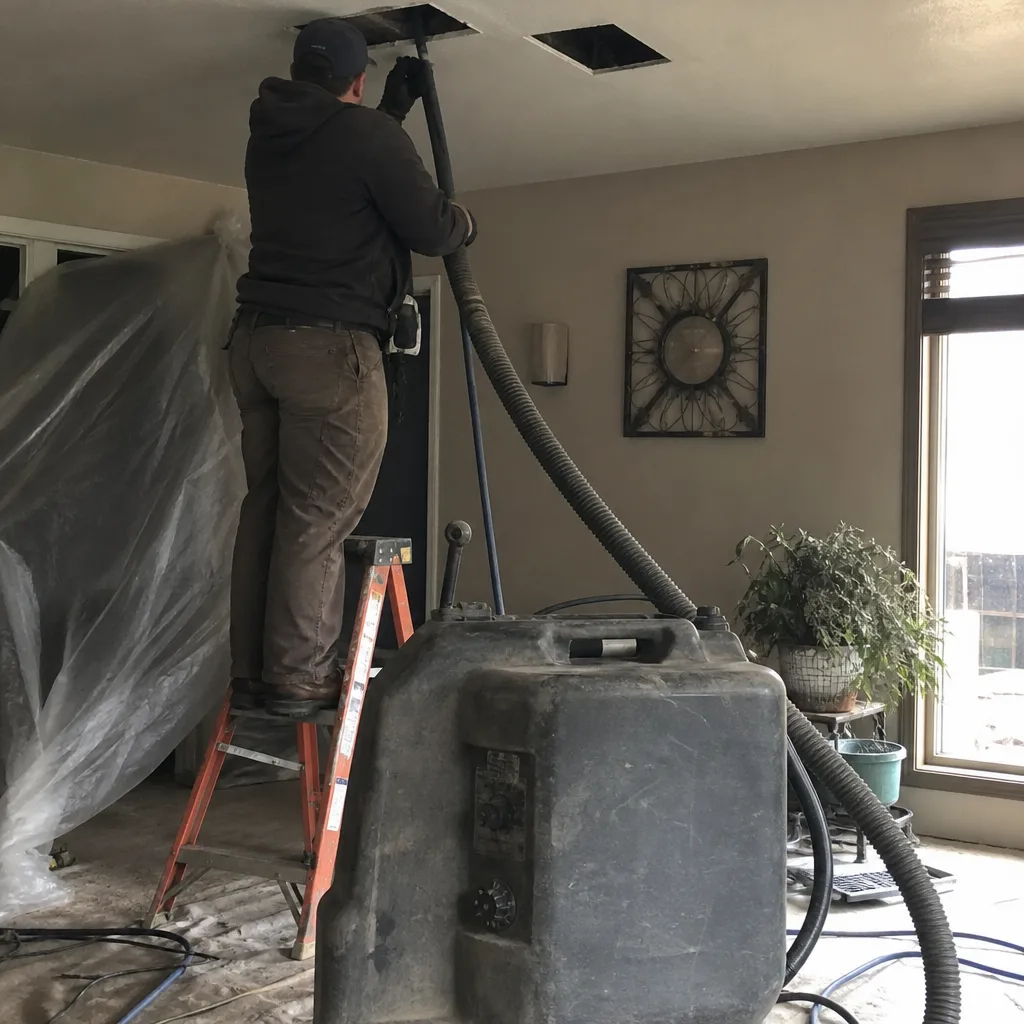
- Abatement Technologies negative-air equipment. This is the containment piece, and it’s the one most homeowners never hear about. Negative-air equipment keeps the working area under a slight vacuum so dislodged debris is captured at the source and pulled out of the system rather than pushed into the living space. Captured, not recirculated.
Why the stack matters
A shop vac and a bargain blower can knock loose debris off the top of a run. They can’t agitate what’s stuck to the walls, can’t filter the fine particles, and can’t contain what they dislodge. In our experience the low-bid jobs that leave a home dustier than before were done with the wrong tools run in the wrong order. The professional stack exists because the work has a sequence: agitate, capture, filter, contain. Skipping any of the three turns a cleaning into a redistribution.
Dryer Vent Cleaning Belongs on the Same Schedule
Dryer vent cleaning is the service most duct cleaners treat as an afterthought, and it shouldn’t be. A clogged dryer vent is a documented leading cause of residential fires, and the lint that builds up inside the vent is the same kind of fine, flammable material that gathers in a duct. Putting it on the same annual or seasonal check as the ducts closes a real safety gap.
For a Highlands Ranch home, the dryer vent adds its own seasonal wrinkle. The vent runs are often long, and lint accumulates where the run bends or drops. A spring or fall dryer vent cleaning alongside the duct inspection catches the buildup before it becomes a fire hazard, and it keeps the dryer running at the efficiency the appliance was built for. It’s a small addition to a seasonal routine with an outsized safety payoff.
Common Mistakes to Avoid
- Treating “every three to five years” as a fixed rule. In a Highlands Ranch home with wildfire smoke weeks and heavy winter static, that rhythm can be too slow. Log your own conditions and let them set the interval.
- Skipping the spring inspection. The residue heating season leaves behind is freshest and easiest to read in spring. Wait until fall and you’re cleaning blind.
- Assuming the filter is catching everything. Filter bypass around the frame is a common source of duct grime that homeowners never see because the filter looks fine. Check the frame, not just the pad.
- Ignoring an ashy or musty smell at startup. A smell is a real indicator. In a dry, smoke-prone Highlands Ranch season it deserves a look, not a candle.
- Hiring on a low coupon price. A coupon that becomes a large invoice on site is the industry’s bait-and-switch pattern. One flat price per system agreed before work starts is the honest version.
- Cleaning without containment. A cleaning done without negative-air equipment can push debris back into the house. Ask what the crew uses before they start.
- Forgetting the dryer vent. Duct cleaning that skips the dryer vent leaves a documented fire hazard untouched. Put it on the same calendar.
See the difference
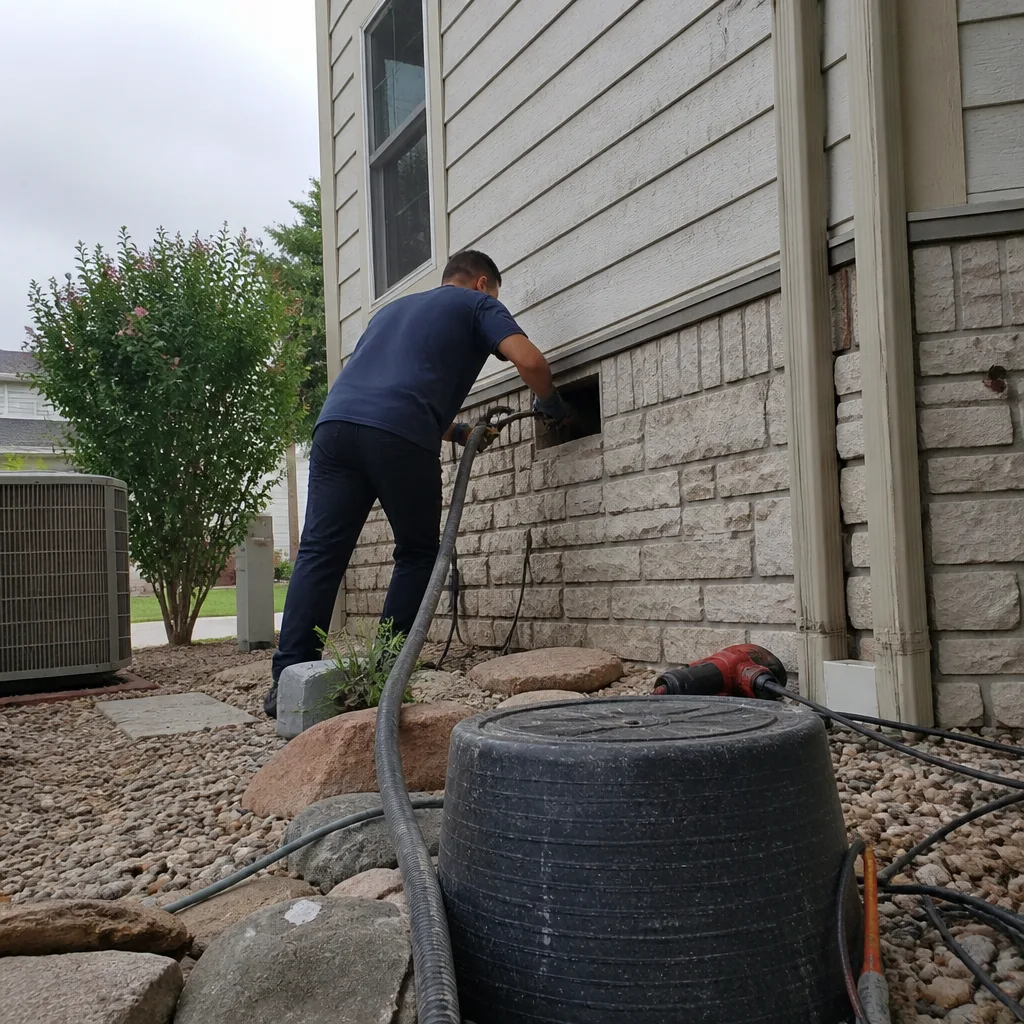 Before
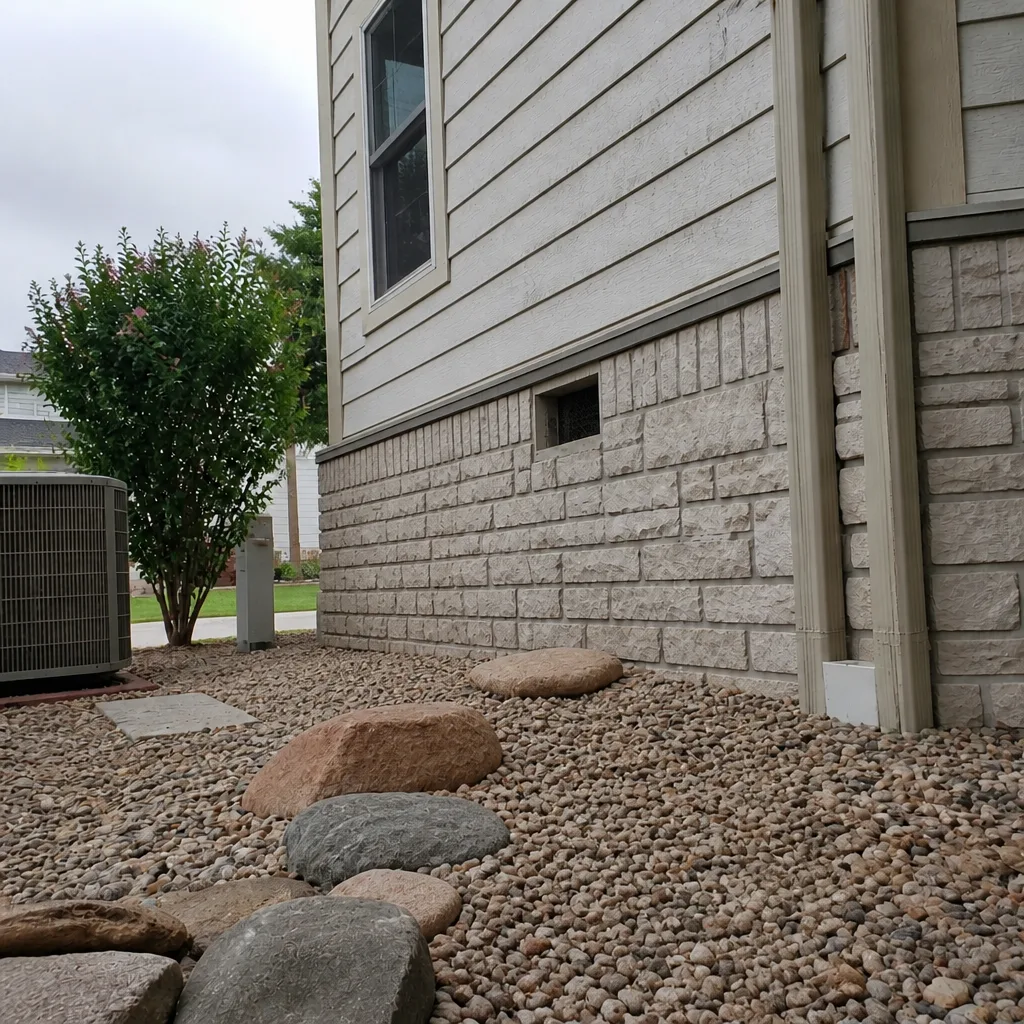 After
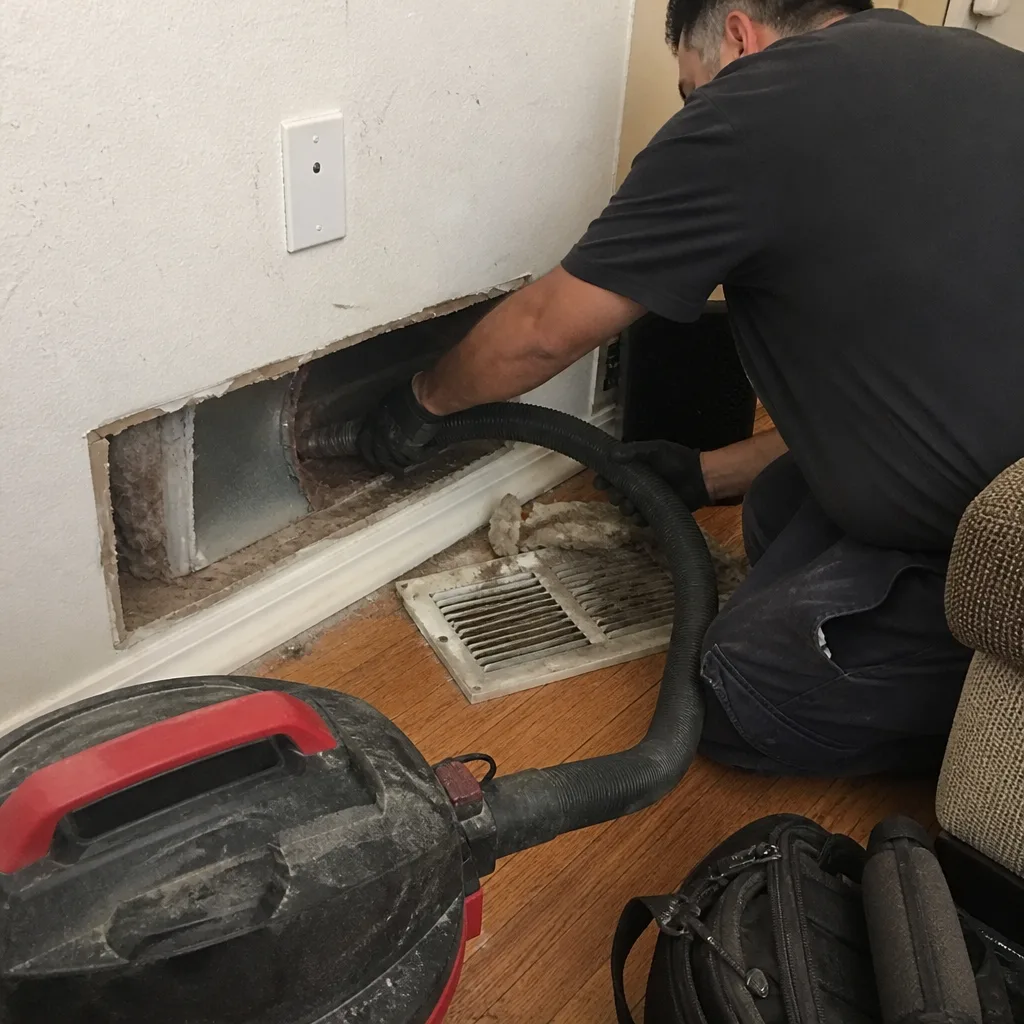 Before
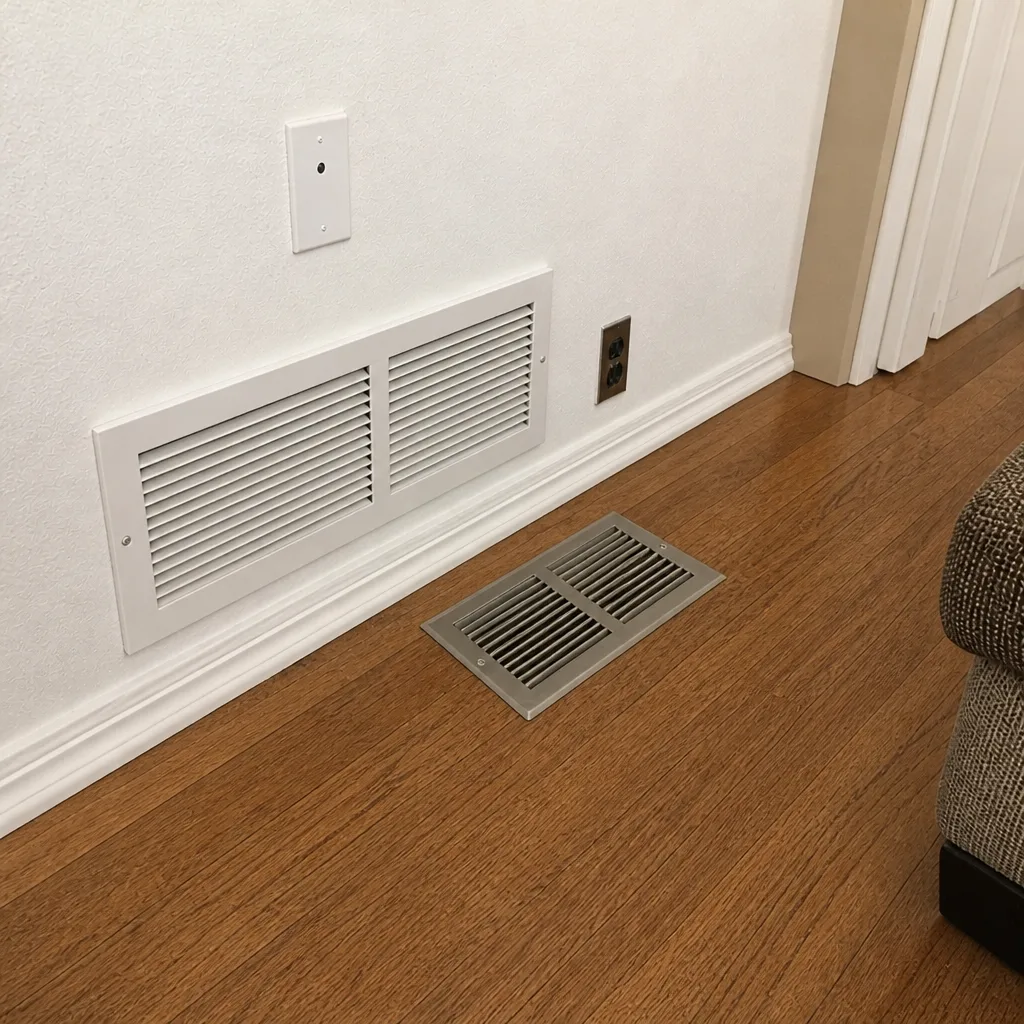 After
 Before
 After
When to Call a Professional
Most seasonal care is something a homeowner can track. A few signals mean it’s time to call. Visible sediment or a heavy dust film at the registers after a smoke event points to cleaning. A persistent musty or ashy smell each time the system turns on is a real indicator. A filter that loads up far faster than it used to suggests the system is carrying more debris than it did. Animal intrusion into a flex run, a disconnected joint, or a crushed run needs repair, not just cleaning. And if a home has never had a professional inspection, a single visit establishes a baseline the log can build on afterward.
Remington Air Duct Cleaning offers free estimates in Highlands Ranch – call (866) 890-5531. We answer 24/7. Fast dispatch from 7am to 7pm, Sunday through Friday. The written estimate sets the price, and that price holds through the job.
Our technicians have up to 8 years of experience, and the equipment we bring is professional-grade every job: Rotobrush, Nikro and Abatement Technologies negative-air containment. When a job calls for air duct repair alongside cleaning, we handle both. Before-and-after photos of your own ducts come with the work, so you can see what was captured rather than take our word for it. The estimate is free, and the price on it is the price you pay.
Frequently Asked Questions
A baseline of every three to five years is reasonable, but Highlands Ranch’s seasonal load can justify cleaning sooner. A heavy wildfire smoke season, visible winter dust film at the grilles, or a fast-loading filter all point to an interval shorter than the generic range. A rolling 12-month log gives you the evidence to decide.
Yes. Smoke particulate is far finer than household dust and standard filters don’t capture the smallest particles before they reach the ductwork. The oily composition makes it prone to sticking to duct walls, where it can leave a persistent odor at each startup. Cleaning after a heavy smoke event, with proper negative-air containment, removes what settled.
Spring is when heating season’s residue is freshest and easiest to read. Combustion byproducts, humidifier scale and filter bypass sediment have all just accumulated over the winter. An inspection in spring tells you the most about the system’s health and lets you clean before cooling season and wildfire season arrive.
Yes. Extremely dry winter air builds static on duct walls and grilles, and charged dust clings to those surfaces instead of moving through or settling. That’s why grilles dust up so heavily through a Highlands Ranch winter. Managing indoor humidity with a working humidifier reduces the effect across the whole house.
Pricing is per job, by written estimate, based on the size and layout of the system, the number of runs and the condition found during inspection. That’s why an honest quote comes from an on-site look, not a coupon. One flat price per system agreed before work starts is the standard to ask for. Call (866) 890-5531 for an exact quote. Estimates are free.
Ask for before-and-after photos of your own ducts. A professional cleaning with negative-air containment captures debris rather than pushing it back into the house, and the photos show what came out. The right tools leave a visible difference. Call (866) 890-5531 to talk through what a full-system clean on your home involves.
The Bottom Line
Highlands Ranch hands a duct system four distinct seasonal loads, and a fixed “every few years” schedule doesn’t account for any of them. Spring inspection clears what heating season left behind. Summer protection against fine wildfire smoke keeps the return side clean when the house is closed up. Fall checks the furnace and the duct runs before they carry the most air of the year. Winter humidity management stops static from gluing dust to everything. A rolling 12-month log ties it together and tells you when your own conditions call for professional cleaning. Professional equipment and proper containment make the difference between cleaning a system and just disturbing it.
If it’s time for a seasonal look at your ducts, call Remington Air Duct Cleaning at (866) 890-5531 for a free estimate. We answer 24/7. Fast dispatch from 7am to 7pm, Sunday through Friday. One flat price per system, agreed before work starts. Before-and-after photos of your own ducts. Insured and bonded, with professional-grade equipment on every job.
Written by the team at Remington Air Duct Cleaning.